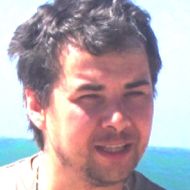
Осадчий Алексей Евгеньевич
Институт когнитивных нейронаук
Профессиональные интересы
Должности
- Директор центра — Институт когнитивных нейронаук, Центр биоэлектрических интерфейсов
- Профессор — Факультет компьютерных наук, Департамент анализа данных и искусственного интеллекта
Био
- · Начал работать в НИУ ВШЭ в 2013 году.
- · Научно-педагогический стаж: 21 год.
Образование
- 2023 · Доктор наук: Национальный исследовательский университет "Высшая школа экономики"
- 2003 · PhD: Университет Южной Калифорнии, специальность 01.00.00 «Физико-математические науки» и 03.03.06 «Нейробиология», тема диссертации: Автоматическое неинвазивное обнаружение и анализ взаимодействия эпилептогенных зон на основании МЭГ и ЭЭГ измерений
- 1997 · Специалитет: Московский государственный технический университет им. Н.Э. Баумана, специальность «Автономные информационные и управляющие системы», квалификация «Инженер-радиотехник»
Опыт работы
- · Директор Центра биоэлектрических интерфейсов НИУ ВШЭ Ведущий научный сотрудник Центра познания и принятия решений НИУ ВШЭ Профессор кафедры анализа данных и искусственного интеллекта НИУ ВШЭ Старший научный сотрудник Центра познания и принятия решений НИУ ВШЭ
- · 2007-2013: гг. Доцент див. для высшей нервной деятельности, Биолого-почвенный факультет Санкт-Петербургского государственного университета
- · 2005-2015: гг. Независимый консультант по визуализации сигналов источника, Сан-Диего, Калифорния
- · 2003-2005: гг. Старший ученый. Source Signal Imaging Inc., Сан-Диего, Калифорния
- · 1999 — 2003: 09/ Научный сотрудник. Лаборатория нейровизуализации при USC, адв. Р. Лихи
- · 2002 — 2003: 09/ Научный сотрудник. Отделение MEG в Huntington Medical Res. Inst
- · 2001: 06/ 01/
- · 2002: Консультационный отдел химии, USC
- · 2000: 05/ 08/
- · 2000: Research Intern. Исследовательские лаборатории Хьюза, Малибу, Калифорния
- · 1998: 09/ 08/
- · 1999: Научный сотрудник. Центр интегрированных медиа-систем (IMSC, USC)
- · 1995: 03/ 07/
- · 1998: Научный сотрудник. Исследовательский центр «Модуль», Москва
- · 01.1993 — 03.1995: Научный сотрудник. Кафедра автономных систем управления МГТУ им. Н. Э. Баумана
Награды и поощрения
- · Медаль "Признание - 10 лет успешной работы" НИУ ВШЭ (июль 2025)
- · Благодарность Высшей школы экономики (сентябрь 2021)
- · Благодарность Факультета компьютерных наук НИУ ВШЭ (август 2018)
- · Надбавка за защиту докторской диссертации (2023–2026)
- · Надбавка за публикацию в международном рецензируемом научном издании (2019–2021, 2018–2020, 2017–2018)
- · Надбавка за регулярные публикации в международных рецензируемых научных изданиях (2024–2029, 2023–2028, 2021–2026)
- · Надбавка за статью в зарубежном рецензируемом журнале (2015–2017)
Гранты и проекты
- 1017 · Система регистрации и декодирования биоэлектрической активности мозга человека, госконтракт, Министерство Образования и Науки РФ, совместно с ННГУ. 2014-1017 г.
- — · Новая неинвазивная экспериментально-математическая парадигма предоперационного магнитоэнцефалографического картирования речевой коры головного мозга, Грант РФФИ 14-02-00917
- — · РФФИ 16-04-01863 Эндогенное повышение эффективности работы интерфейсов мозг-компьютер
Конференции (10)
Показать все
- · 2024: 27th European Conference on Artificial Intelligence (ECAI 2024) (Сантьяго-де-Компостела). Доклад: EEG-Based fMRI Digital Twin: Towards a Cheap and Ecological Approach to Measure Subcortical Brain Activity
- · 2023: The Fifth International Conference «Neurotechnologies and Neurointerfaces» (CNN 2023) (Kaliningrad). Доклад: Interpretable neural networks in neurointerfaces and neuroimaging methods
- · 2023: Volga Neuroscience Meeting 2023 (Нижний Новгород). Доклад: Diagnostic approaches for precision medicine in epilepsy
- · 2016: IEEE International Symposium «Video and Audio Signal Processing in the Context of Neurotechnologies» (Санкт-Петербург). Доклад: MEG correlates of internalization of social influence
- · 2016: Biomag 2016 (Сеул). Доклад: Power and shift invariant imaging of coherent sources from MEG data (PSIICoS)
- · 2015: V Международная конференция по биотехнологиям и фармацевтике ФизтехБио — 2015 (Москва). Доклад: MEG and EEG based neuroimaging of transient networks
- · 2015: Методические проблемы оценки функциональной синхронизации зон коры мозга на основании ЭЭГ-/МЭГ данных» (Москва). Доклад: МЭГ как результат активности и взаимодействия динамических сетей: метод порождающей модели
- · 2014: International conference on biomagnetism, Biomag 2014 (Галифакс). Доклад: Interaction Space RAP-MUSIC for estimation of transient networks from MEG data
- · 2014: 9th FENS Forum of Neuroscience (Милан). Доклад: MPFC activity varies with differences in social conformity: MEG study
- · 2014: Научная сессия "Проблемы мозга" Российской Академии Наук (Москва). Доклад: Эффективное нейробиоуправление на основе пространственно-временных динамических моделей
Идентификаторы исследователя
- ORCID:
0000-0001-8827-9429 - ResearcherID:
M-9067-2013 - SPIN РИНЦ:
5631-4743 - Google Scholar: https://scholar.google.ru/citations?user=uVunrzkAAAAJ&hl=en
- Scopus AuthorID:
6603011121
Публикации (98)
Latent variable method for automatic adaptation to background states in motor imagery BCI
2018 · ARTICLE · en
Objective. Brain-computer interface (BCI) systems are known to be vulnerable to variabilities in background states of a user. Usually, no detailed information on these states is available even during the training stage. Thus there is a need in a method which is capable of taking background states into account in an unsupervised way. Approach. We propose a latent variable method that is based on a probabilistic model with a discrete latent variable. In order to estimate the model's parameters, we suggest to use the expectation maximization (EM) algorithm. The proposed method is aimed at assessing characteristics of background states without any corresponding data labeling. In the context of asynchronous motor imagery paradigm, we applied this method to the real data from twelve able-bodied subjects with open/closed eyes serving as background states. Main results. We found that the latent variable method improved classication of target states compared to the baseline method (in seven of twelve subjects). In addition, we found that our method was also capable of background states recognition (in six of twelve subjects). Signicance. Without any supervised information on background states, the latent variable method provides a way to improve classication in BCI by taking background states into account at the training stage and then by making decisions on target states weighted by posterior probabilities of background states at the prediction stage.
Commentary: Spatial Olfactory Learning Contributes to Place Field Formation in the Hippocampus
2018 · ARTICLE · en
The discovery of place-representing neurons in the hippocampal formation has been recognized by the Nobel Committee as a paradigm shift in Neuroscience (Burgess, 2014). Here we call attention to an innovative paper of particular note (Zhang and Manahan-Vaughan, 2015) that added important findings to this field of study. Zhang and Manahan-Vaughan investigated the contribution of olfactory cues to the formation of place fields in hippocampal neurons. For this purpose, they put male Wistar rats in the darkness into a 80 × 80 cm square box. Four odors (orange, vanilla, almond, and lemon) were placed into the quadrants of the arena. Chocolate crumbs were scattered across the arena to encourage exploratory behavior. The researchers observed the formation of stable place fields in the hippocampal neurons, even though visual cues were unavailable to the rats. The place fields rotated when the odor placements were rotated, and remapped when the odors were shuffled. The authors concluded that “despite the less precise nature of olfactory stimuli compared with visual stimuli, these can substitute for visual inputs to enable the acquisition of metric information about space.”
Commentary: Injecting Instructions into Premotor Cortex
2018 · ARTICLE · en
Here we call attention to a scholarly paper of particular note, where Mazurek and Schieber (Mazurek and Schieber, 2017) reported for the first time that arm reaching tasks performed by rhesus monkeys can be instructed by intracortical stimulation (ICMS) applied to dorsal premotor cortex (PMd). Monkeys started each trial by grasping with the hand a home handle that was surrounded by four target handles. Next, reach direction was instructed by turning on a display composed of light emitting diodes (LEDs) at the base of the target handle and/or applying ICMS to different sites in PMd. ICMS of the primary somatosensory cortex (S1) was also tested in the same context. Monkeys responded to the instruction by releasing the home handle and grasping the target handle. They learned to respond correctly to both LED and ICMS instructions, with very high success rate (96–99%).
Navigation Patterns and Scent Marking: Underappreciated Contributors to Hippocampal and Entorhinal Spatial Representations?
2018 · ARTICLE · en
According to the currently prevalent theory, hippocampal formation constructs and maintains cognitive spatial maps. Most of the experimental evidence for this theory comes from the studies on navigation in laboratory rats and mice, typically male animals. While these animals exhibit a rich repertoire of behaviors associated with navigation, including locomotion, head movements, whisking, sniffing, raring and scent marking, the contribution of these behavioral patterns to hippocampal activity has not been sufficiently studied. Instead, many publications have considered animal position in space as the single variable that affects the firing of hippocampal place cells and entorhinal grid cells. Here we argue that future work should focus on a more detailed examination of different behaviors exhibited during navigation in order to interpret the cause of spatial tuning in hippocampal neurons. As a step in this direction, we have analyzed data from two datasets, shared online, containing recordings from rats navigating in square and round arenas. Our analyses revealed structured, grid-like navigation patterns, evident from the spatial maps of animal position, velocity and acceleration. Moreover, grid cells available in the datasets exhibited the same spatial periodicity as the navigation parameters. These findings cast doubt on the cognitive-map interpretation of grid cells, since they suggest that neuronal spatial patterns could be caused by behaviors associated with navigation instead of representing a hierarchically high spatial map. Additionally, we speculate that scent marks left by navigating animals could contribute to neuronal responses while rats and mice sniff their environment.
Towards magnetoencephalography based on ultrasensitive laser pumped non-zero field magnetic sensor
2018 · CHAPTER · en
The principal possibility of creating optically pumped compact magnetic sensor for MEG operating in a wide magnetic field range is experimentally proved.
Testing the Efforts Model of Simultaneous Interpreting: An ERP Study
2018 · ARTICLE · en
We utilized the event-related potential (ERP) technique to study neural activity associated with different levels of working memory (WM) load during simultaneous interpretation (SI) of continuous prose. The amplitude of N1 and P1 components elicited by task-irrelevant tone probes was significantly modulated as a function of WM load but not the direction of interpretation. Furthermore, the latency of the P1 increased significantly with WM load. The WM load effect on N1 latency, however, did not reach significance. Larger negativity under lower WM loads suggests that more attention is available to process the source message, providing the first electrophysiological evidence in support of the Efforts Model of SI. Relationships between the direction of interpretation and median WM load are also discussed.
Phase shift invariant imaging of coherent sources (PSIICOS) from MEG data.
2018 · ARTICLE · en
Increasing evidence suggests that neuronal communication is a defining property of functionally specialized brain networks and that it is implemented through synchronization between population activities of distinct brain areas. The detection of long-range coupling in electroencephalography (EEG) and magnetoencephalography (MEG) data using conventional metrics (such as coherence or phase-locking value) is by definition contaminated by spatial leakage. Methods such as imaginary coherence, phase-lag index or orthogonalized amplitude correlations tackle spatial leakage by ignoring zero-phase interactions. Although useful, these metrics will by construction lead to false negatives in cases where true zero-phase coupling exists in the data and will underestimate interactions with phase lags in the vicinity of zero. Yet, empirically observed neuronal synchrony in invasive recordings indicates that it is not uncommon to find zero or close-to-zero phase lag between the activity profiles of coupled neuronal assemblies. Here, we introduce a novel method that allows us to mitigate the undesired spatial leakage effects and detect zero and near zero phase interactions. To this end, we propose a projection operation that operates on sensor-space cross-spectrum and suppresses the spatial leakage contribution but retains the true zero-phase interaction component. We then solve the network estimation task as a source estimation problem defined in the product space of interacting source topographies. We show how this framework provides reliable interaction detection for all phase-lag values and we thus refer to the method as Phase Shift Invariant Imaging of Coherent Sources (PSIICOS). Realistic simulations demonstrate that PSIICOS has better detector characteristics than existing interaction metrics. Finally, we illustrate the performance of PSIICOS by applying it to real MEG dataset recorded during a standard mental rotation task. Taken together, using analytical derivations, data simulations and real brain data, this study presents a novel source-space MEG/EEG connectivity method that overcomes previous limitations and for the first time allows for the estimation of true zero-phase coupling via non-invasive electrophysiological recordings.
NFBLab - a versatile software for neurofeedback and brain-computer interface research
2018 · ARTICLE · en
Neurofeedback (NFB) is a real-time paradigm, where subjects learn to volitionally modulate their own brain activity recorded with electroencephalographic (EEG), magnetoencephalographic (MEG) or other functional brain imaging techniques and presented to them via one of sensory modalities: visual, auditory or tactile. NFB has been proposed as an approach to treat neurological conditions and augment brain functions. Although the early NFB studies date back nearly six decades ago, there is still much debate regarding the efficiency of this approach and the ways it should be implemented. Partly, the existing controversy is due to suboptimal conditions under which the NFB training is undertaken. Therefore, new experimental tools attempting to provide optimal or close to optimal training conditions are needed to further exploration of NFB paradigms and comparison of their effects across subjects and training days. To this end, we have developed open-source NFBLab, a versatile, python-based software for conducting NFB experiments with completely reproducible paradigms and low-latency feedback presentation. Complex experimental protocols \textcolor{red}{can be configured} using the GUI and saved in NFBLab's internal XML-based language that describes signal processing tracts, experimental blocks and sequences including randomization of experimental blocks. NFBLab implements interactive modules that enable individualized EEG/MEG signal processing tracts specification using spatial and temporal filters for feature selection and artifacts removal. NFBLab supports direct interfacing to MNE-Python software to facilitate source-space NFB based on individual head models and properly tailored individual inverse solvers. In addition to the standard algorithms for extraction of brain rhythms dynamics from EEG and MEG data, NFBLab implements several novel in-house signal processing algorithms that afford significant reduction in latency of feedback presentation and may potentially improve training effects. The software also supports several standard BCI paradigms. To interface with external data acquisition devices NFBLab employs Lab Streaming Layer protocol supported by the majority of EEG vendors. MEG devices are interfaced though the Fieldtrip buffer.
MEG Signatures of a Perceived Match or Mismatch between Individual and Group Opinions.
2017 · ARTICLE · en
Humans often adjust their opinions to the perceived opinions of others. Neural responses to a perceived match or mismatch between individual and group opinions have been investigated previously, but some findings are inconsistent. In this study, we used magnetoencephalographic source imaging to investigate further neural responses to the perceived opinions of others. We found that group opinions mismatching with individual opinions evoked responses in the anterior and posterior medial prefrontal cortices, as well as in the temporoparietal junction and ventromedial prefrontal cortex in the 220–320 and 380–530 ms time windows. Evoked responses were accompanied by an increase in the power of theta oscillations (4–8 Hz) over a number of frontal cortical sites. Group opinions matching with individual opinions evoked an increase in amplitude of beta oscillations (13–30 Hz) in the anterior cingulate and ventral medial prefrontal cortices. Based on these results, we argue that distinct valuation and performance-monitoring neural circuits in the medial cortices of the brain may monitor compliance of individual behavior to the perceived group norms.
Курсы (1)
-
Mathematical Aspects of EEG and MEG Based Neuroimaging · 5 раза
2025/2026, 2024/2025, 2023/2024, 2022/2023, 2021/2022 · Магистратура / Маго-лего · Анг