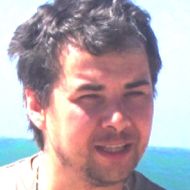
Осадчий Алексей Евгеньевич
Институт когнитивных нейронаук
Профессиональные интересы
Должности
- Директор центра — Институт когнитивных нейронаук, Центр биоэлектрических интерфейсов
- Профессор — Факультет компьютерных наук, Департамент анализа данных и искусственного интеллекта
Био
- · Начал работать в НИУ ВШЭ в 2013 году.
- · Научно-педагогический стаж: 21 год.
Образование
- 2023 · Доктор наук: Национальный исследовательский университет "Высшая школа экономики"
- 2003 · PhD: Университет Южной Калифорнии, специальность 01.00.00 «Физико-математические науки» и 03.03.06 «Нейробиология», тема диссертации: Автоматическое неинвазивное обнаружение и анализ взаимодействия эпилептогенных зон на основании МЭГ и ЭЭГ измерений
- 1997 · Специалитет: Московский государственный технический университет им. Н.Э. Баумана, специальность «Автономные информационные и управляющие системы», квалификация «Инженер-радиотехник»
Опыт работы
- · Директор Центра биоэлектрических интерфейсов НИУ ВШЭ Ведущий научный сотрудник Центра познания и принятия решений НИУ ВШЭ Профессор кафедры анализа данных и искусственного интеллекта НИУ ВШЭ Старший научный сотрудник Центра познания и принятия решений НИУ ВШЭ
- · 2007-2013: гг. Доцент див. для высшей нервной деятельности, Биолого-почвенный факультет Санкт-Петербургского государственного университета
- · 2005-2015: гг. Независимый консультант по визуализации сигналов источника, Сан-Диего, Калифорния
- · 2003-2005: гг. Старший ученый. Source Signal Imaging Inc., Сан-Диего, Калифорния
- · 1999 — 2003: 09/ Научный сотрудник. Лаборатория нейровизуализации при USC, адв. Р. Лихи
- · 2002 — 2003: 09/ Научный сотрудник. Отделение MEG в Huntington Medical Res. Inst
- · 2001: 06/ 01/
- · 2002: Консультационный отдел химии, USC
- · 2000: 05/ 08/
- · 2000: Research Intern. Исследовательские лаборатории Хьюза, Малибу, Калифорния
- · 1998: 09/ 08/
- · 1999: Научный сотрудник. Центр интегрированных медиа-систем (IMSC, USC)
- · 1995: 03/ 07/
- · 1998: Научный сотрудник. Исследовательский центр «Модуль», Москва
- · 01.1993 — 03.1995: Научный сотрудник. Кафедра автономных систем управления МГТУ им. Н. Э. Баумана
Награды и поощрения
- · Медаль "Признание - 10 лет успешной работы" НИУ ВШЭ (июль 2025)
- · Благодарность Высшей школы экономики (сентябрь 2021)
- · Благодарность Факультета компьютерных наук НИУ ВШЭ (август 2018)
- · Надбавка за защиту докторской диссертации (2023–2026)
- · Надбавка за публикацию в международном рецензируемом научном издании (2019–2021, 2018–2020, 2017–2018)
- · Надбавка за регулярные публикации в международных рецензируемых научных изданиях (2024–2029, 2023–2028, 2021–2026)
- · Надбавка за статью в зарубежном рецензируемом журнале (2015–2017)
Гранты и проекты
- 1017 · Система регистрации и декодирования биоэлектрической активности мозга человека, госконтракт, Министерство Образования и Науки РФ, совместно с ННГУ. 2014-1017 г.
- — · Новая неинвазивная экспериментально-математическая парадигма предоперационного магнитоэнцефалографического картирования речевой коры головного мозга, Грант РФФИ 14-02-00917
- — · РФФИ 16-04-01863 Эндогенное повышение эффективности работы интерфейсов мозг-компьютер
Конференции (10)
Показать все
- · 2024: 27th European Conference on Artificial Intelligence (ECAI 2024) (Сантьяго-де-Компостела). Доклад: EEG-Based fMRI Digital Twin: Towards a Cheap and Ecological Approach to Measure Subcortical Brain Activity
- · 2023: The Fifth International Conference «Neurotechnologies and Neurointerfaces» (CNN 2023) (Kaliningrad). Доклад: Interpretable neural networks in neurointerfaces and neuroimaging methods
- · 2023: Volga Neuroscience Meeting 2023 (Нижний Новгород). Доклад: Diagnostic approaches for precision medicine in epilepsy
- · 2016: IEEE International Symposium «Video and Audio Signal Processing in the Context of Neurotechnologies» (Санкт-Петербург). Доклад: MEG correlates of internalization of social influence
- · 2016: Biomag 2016 (Сеул). Доклад: Power and shift invariant imaging of coherent sources from MEG data (PSIICoS)
- · 2015: V Международная конференция по биотехнологиям и фармацевтике ФизтехБио — 2015 (Москва). Доклад: MEG and EEG based neuroimaging of transient networks
- · 2015: Методические проблемы оценки функциональной синхронизации зон коры мозга на основании ЭЭГ-/МЭГ данных» (Москва). Доклад: МЭГ как результат активности и взаимодействия динамических сетей: метод порождающей модели
- · 2014: International conference on biomagnetism, Biomag 2014 (Галифакс). Доклад: Interaction Space RAP-MUSIC for estimation of transient networks from MEG data
- · 2014: 9th FENS Forum of Neuroscience (Милан). Доклад: MPFC activity varies with differences in social conformity: MEG study
- · 2014: Научная сессия "Проблемы мозга" Российской Академии Наук (Москва). Доклад: Эффективное нейробиоуправление на основе пространственно-временных динамических моделей
Идентификаторы исследователя
- ORCID:
0000-0001-8827-9429 - ResearcherID:
M-9067-2013 - SPIN РИНЦ:
5631-4743 - Google Scholar: https://scholar.google.ru/citations?user=uVunrzkAAAAJ&hl=en
- Scopus AuthorID:
6603011121
Публикации (98)
Exploration of Cortical Dynamics in the Center-Out with Stylus Paradigm
2021 · CHAPTER · en
This study aims to identify correlations between the directions of the hand movements and the brain signals recorded from the brain surface using electrocorticography (ECoG). We suppose that the coding of the hand movement direction occurs in the motor cortex and could be detected with ECoG. Using representational similarity analysis (RSA) and the cosine tuning assumption we confirmed that indeed, there is a significant concordance between the brain signals and the hand movement directions. And the main areas of the brain responsible for this have been identified.
Consensus on the reporting and experimental design of clinical and cognitive-behavioural neurofeedback studies
2020 · ARTICLE · en
Neurofeedback has begun to attract the attention and scrutiny of the scientific and medical mainstream. Here, neurofeedback researchers present a consensus-derived checklist that aims to improve the reporting and experimental design standards in the field.
Digital filters for low-latency quantification of brain rhythms in real-time
2020 · ARTICLE · en
Objective. The rapidly developing paradigm of closed-loop neuroscience has extensively employed brain rhythms as the signal forming real-time neurofeedback, triggering brain stimulation, or governing stimulus selection. However, the efficacy of brain rhythm contingent paradigms suffers from significant delays related to the process of extraction of oscillatory parameters from broad-band neural signals with conventional methods. To this end, real-time algorithms are needed that would shorten the delay while maintaining an acceptable speed-accuracy trade-off. Approach. Here we evaluated a family of techniques based on the application of the least-squares complex-valued filter (LSCF) design to real-time quantification of brain rhythms. These techniques allow for explicit optimization of the speed-accuracy trade-off when quantifying oscillatory patterns. We used EEG data collected from 10 human participants to systematically compare LSCF approach to the other commonly used algorithms. Each method being evaluated was optimized by scanning through the grid of its hyperparameters using independent data samples. Main results. When applied to the task of estimating oscillatory envelope and phase, the LSCF techniques outperformed in speed and accuracy both conventional Fourier transform and rectification based methods as well as more advanced techniques such as those that exploit autoregressive extrapolation of narrow-band filtered signals. When operating at zero latency, the weighted LSCF approach yielded 75\% accuracy when detecting alpha-activity episodes, as defined by the amplitude crossing of the 95th-percentile threshold. Significance. The LSCF approaches are easily applicable to low-delay quantification of brain rhythms. As such, these methods are useful in a variety of neurofeedback, brain-computer-interface and other experimental paradigms that require rapid monitoring of brain rhythms.
Short-delay neurofeedback facilitates training of the parietal alpha rhythm
2020 · ARTICLE · en
Objective: Feedback latency was shown to be a critical parameter in a range of applications that imply learning. The therapeutic effects of neurofeedback (NFB) remain controversial. We hypothesized that often encountered unreliable results of NFB intervention could be associated with large feedback latency values that are often uncontrolled and may preclude the efficient learning. Approach: We engaged our subjects into a parietal alpha power unpregulating paradigm faciliated by visual neurofeedback based on the invidually extracted envelope of the alpha-rhythm at P4 electrode. NFB was displayed either as soon as EEG envelope was processed, or with an extra 250 or 500-ms delay. The feedback training consisted of 15 two-minute long blocks interleaved with 15s pauses. We have also recorded two minute long baselines immediately before and after the training. Main results: The time course of NFB-induced changes in the alpha rhythm power clearly depended on NFB latency, as shown with the adaptive Neyman test. NFB had a strong effect on the alpha-spindle incidence rate, but not on their duration or amplitude. The sustained changes in alpha activity measured after the completion of NFB training were negatively correlated to latency, with the maximum change for the shortest tested latency and no change for the longest. Significance: Here we for the first time show that visual NFB of parietal electroencephalographic (EEG) alpha-activity is efficient only when delivered to human subjects at short latency, which guarantees that NFB arrives when an alpha spindle is still ongoing. Such a considerable effect of NFB latency on the alpha-activity temporal structure could explain some of the previous inconsistent results, where latency was neither controlled nor documented. Clinical practitioners and manufacturers of NFB equipment should add latency to their specifications while enabling latency monitoring and supporting short-latency operations.
Generating Handwriting from Multichannel Electromyographic Activity
2020 · CHAPTER · en
Handwriting is an advanced motor skill and one of the key developments in human culture. Here we show that handwriting can be decoded—offline and online—from electromyographic (EMG) signals recorded from multiple hand and forearm muscles. We convert EMGs into continuous handwriting traces and into discretely decoded font characters. For this purpose, we use Wiener and Kalman filters, and machine learning algorithms. Our approach is applicable to clinical neural prostheses for restoration of dexterous hand movements, and to medical diagnostics of neural disorders that affect handwriting. We also propose that handwriting could be decoded from cortical activity, such as the activity recorded with electrocorticography (ECoG).
Пассивное речевое картирование высокой точности во время операций по поводу глиом доминантного полушария
2019 в печати · ARTICLE · ru
Актуальность. Картирование речевых зон – один из важнейших этапов нейрохирургического вмешательства в области коры головного мозга. Обычно для этой цели применяют электрическую стимуляцию, которая, однако, может вызвать судорожный приступ, что делает невозможным дальнейшее проведение процедуры и значительно изменяет ход операции, особенно в случае выполнения речевого картирования во время интраоперационного пробуждения пациента. Цель исследования – апробировать установку для интраоперационного пассивного картирования функциональных зон коры мозга, сравнить информативность и безопасность пассивного и активного картирования речевых зон. Материалы и методы. Авторами создан и апробирован мобильный программно-аппаратный комплекс для высокоточного определения расположения зоны Брока на основе анализа процессов десинхронизации колебаний высокочастотного гамма-диапазона, регистрируемых 64-микроэлектродной сеткой для электрокортикографии в момент произношения пациентом названий предметов и действий. Результаты. Выявлено точное совпадение локализации речевого центра, которую определили путем анализа изменений биоэлектрического сигнала, полученного от коры мозга при электрокортикографии, и локализации, которую определили путем электростимуляции по классической методике W. Penfield. Заключение. Пассивное картирование функциональных зон коры головного мозга позволяет расширить возможности нейрохирургических операций в соответствующей области мозга и увеличить число пациентов, у которых можно точно установить локализацию речевого центра. Необходимы дальнейшие исследования с разработкой алгоритмов предъявления стимулов и расширением перечня функциональных зон, подлежащих пассивному картированию. Ключевые слова: электрокортикография, речевое картирование, колебания высокочастотного гамма-диапазона, функциональные зоны мозга, электростимуляция
Decoding Movement From Electrocorticographic Activity: A Review
2019 · ARTICLE · en
Electrocorticography (ECoG) holds promise to provide efficient neuroprosthetic solutions for people suffering from neurological disabilities. This recording technique combines adequate temporal and spatial resolution with the lower risks of medical complications compared to the other invasive methods. ECoG is routinely used in clinical practice for preoperative cortical mapping in epileptic patients. During the last two decades, research utilizing ECoG has considerably grown, including the paradigms where behaviorally relevant information is extracted from ECoG activity with decoding algorithms of different complexity. Several research groups have advanced toward the development of assistive devices driven by brain-computer interfaces (BCIs) that decode motor commands from multichannel ECoG recordings. Here we review the evolution of this field and its recent tendencies, and discuss the potential areas for future development.
Analysis of neuronal ensemble activity reveals the pitfalls and shortcomings of rotation dynamics.
2019 · ARTICLE · en
Back in 2012, Churchland and his colleagues proposed that “rotational dynamics”, uncovered through linear transformations of multidimensional neuronal data, represent a fundamental type of neuronal population processing in a variety of organisms, from the isolated leech central nervous system to the primate motor cortex. Here, we evaluated this claim using Churchland’s own data and simple simulations of neuronal responses. We observed that rotational patterns occurred in neuronal populations when (1) there was a temporal sequence in peak firing rates exhibited by individual neurons, and (2) this sequence remained consistent across different experimental conditions. Provided that such a temporal order of peak firing rates existed, rotational patterns could be easily obtained using a rather arbitrary computer simulation of neural activity; modeling of any realistic properties of motor cortical responses was not needed. Additionally, arbitrary traces, such as Lissajous curves, could be easily obtained from Churchland’s data with multiple linear regression. While these observations suggest that temporal sequences of neuronal responses could be visualized as rotations with various methods, we express doubt about Churchland et al.’s bold assessment that such rotations are related to “an unexpected yet surprisingly simple structure in the population response”, which “explains many of the confusing features of individual neural responses”. Instead, we argue that their approach provides little, if any, insight on the underlying neuronal mechanisms employed by neuronal ensembles to encode motor behaviors in any species.
What, if anything, is the true neurophysiological significance of “rotational dynamics”?
2019 · PREPRINT · en
Back in 2012, Churchland and his colleagues proposed that “rotational dynamics”, uncovered through linear transformations of multidimensional neuronal data, represent a fundamental type of neuronal population processing in a variety of organisms, from the isolated leech central nervous system to the primate motor cortex. Here, we evaluated this claim using Churchland’s own data and simple simulations of neuronal responses. We observed that rotational patterns occurred in neuronal populations when (1) there was a temporal shift in peak firing rates exhibited by individual neurons, and (2) the temporal sequence of peak rates remained consistent across different experimental conditions. Provided that such a temporal order of peak firing rates existed, rotational patterns could be easily obtained using a rather arbitrary computer simulation of neural activity; modeling of any realistic properties of motor cortical responses was not needed. Additionally, arbitrary traces, such as Lissajous curves, could be easily obtained from Churchland’s data with multiple linear regression. While these observations suggest that temporal sequences of neuronal responses could be visualized as rotations with various methods, we express doubt about Churchland et al.’s exaggerated assessment that such rotations are related to “an unexpected yet surprisingly simple structure in the population response”, which “explains many of the confusing features of individual neural responses.” Instead, we argue that their approach provides little, if any, insight on the underlying neuronal mechanisms employed by neuronal ensembles to encode motor behaviors in any species.
Decoding movement time-course from ecog using deep learning and implications for bidirectional brain-computer interfacing
2019 · CHAPTER · en
Brain computer interfaces are a growing research field producing many implementations that find various uses in research and medical practice and everyday life. Despite the popularity of the implementations using non-invasive neuroimaging methods, radical improvement in the state channel bandwidth and, thus, decoding accuracy is only possible by using invasive techniques. Electrocorticography (ECoG) is a minimally invasive neuroimaging modality that provides highly informative brain activity signals and entails the use of machine learning methods to efficiently decipher the complex spatial-temporal cortical representation of motor and cognitive function. Deep learning techniques is the family of machine learning methods that allow to learn representations of data with multiple levels of abstraction. We hypothesized that the deep learning would allow to reach higher accuracy in the task of decoding movement timecourse than it is possible with traditional signal processing approaches.
Курсы (1)
-
Mathematical Aspects of EEG and MEG Based Neuroimaging · 5 раза
2025/2026, 2024/2025, 2023/2024, 2022/2023, 2021/2022 · Магистратура / Маго-лего · Анг