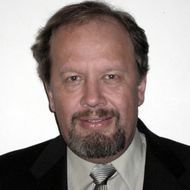
Ратников Федор Дмитриевич
Факультет компьютерных наук
Профессиональные интересы
Должности
- Ведущий научный сотрудник — Факультет компьютерных наук, Институт искусственного интеллекта и цифровых наук, Научно-учебная лаборатория методов анализа больших данных
- Доцент — Факультет компьютерных наук, Департамент больших данных и информационного поиска
Био
- · Начал работать в НИУ ВШЭ в 2016 году.
- · Научно-педагогический стаж: 37 лет.
Образование
- 1994 · Кандидат физико-математических наук
- 1986 · Специалитет: Московский физико-технический институт, специальность «Экспериментальная ядерная физика», квалификация «Инженер-физик»
Опыт работы
- · Professional Experience:
- · 2016-Current Senior Researcher, High School of Economics, Moscow, Russia
- · 2014-2015: Senior Research Associate, Nebraska Un
- · iversity at Lincoln, USA.
- · •
- · Integrate work of 20+ people developing simulation
- · and reconstruction
- · 2023: software for CMS detector upgrade in
- · Fedor.Ratnikov@cern.ch
- · 2
- · •
- · Development and support of the software for the Cal
- · orimeter Upgrade
- · project and event mixing
- · 2008-2014: Scientist, Institute of Experimental Nucl
- · ear Physics (IEKP) in
- · Karlsruhe Institute of Technology, Germany.
- · •
- · Discovered the Higgs boson using CMS detector at LH
- · C (~1:10
- · 13
- · signal to
- · background ratio)
- · •
- · Searched for new physics using CMS detector at LHC
- · (~1:10
- · 14
- · signal to
- · background ratio)
- · •
Награды и поощрения
- · Почетная грамота НИУ ВШЭ (март 2025)
- · Благодарность НИУ ВШЭ (март 2023)
- · Благодарность Факультета компьютерных наук НИУ ВШЭ (сентябрь 2019)
- · Надбавка за публикации, вносящие особый вклад в международную научную репутацию НИУ ВШЭ (2022–2025)
- · Надбавка за публикацию в журнале из Списка А (и приравненном к нему научном издании) (2023–2024)
- · Надбавка за публикацию в международном рецензируемом научном издании (2021–2022, 2019–2021)
- · Надбавка за регулярные публикации в международных рецензируемых научных изданиях (2024–2029)
Гранты и проекты
- — · на соискание учёной степени кандидата наук
Конференции (2)
Показать все
- · 2023: 26th International Conference on Computing in High Energy and Nuclear Physics (CHEP-2023) (Норфолк). Доклад: What Machine Learning Can Do for Focusing Aerogel Detectors
- · 2023: The use of new methods for processing data of a physical experiment. Application of machine learning methods on the NICA complex. (Санкт-Петербург). Доклад: What Machine Learning Can Do for Focusing Aerogel Detectors
Идентификаторы исследователя
- ORCID:
0000-0003-0762-5583 - ResearcherID:
D-5137-2016 - SPIN РИНЦ:
6754-4147 - Google Scholar: https://scholar.google.ru/citations?user=vbLFLLEAAAAJ&hl=en
- Scopus AuthorID:
35227881400
Публикации (13)
ML-based Fast Simulation of FARICH Responses
2026 · PREPRINT · en
A fast simulation of the detector response is a vital task in high-energy physics (HEP). Traditional Monte-Carlo methods form the backbone of modern particle physics simulation software but are computationally expensive. We present a machine-learning-based approach to fast simulation of the Focusing Aerogel Ring Imaging Cherenkov (FARICH) detector response. Given a particle track and momentum, the goal is to generate realistic samples of photon hits on the detector matrix. We propose a conditional Generative Adversarial Network (cGAN) with a lightweight convolutional architecture that reproduces the projected detector response conditioned on particle parameters. We compare the cGAN against a linear statistical baseline using metrics applied to probability maps and to the reconstructed velocity distributions. The cGAN produces realistic samples and provides a significant speed-up over Monte-Carlo simulation.
An Approach to Finding a Robust Deep Learning Model
2025 · ARTICLE · en
The rapid development of machine learning (ML) and artificial intelligence (AI) applications requires the training of a large numbers of models. This growing demand highlights the importance of training models without human supervision, while ensuring that their predictions are reliable. In response to this need, we propose a novel approach for determining model robustness. This approach, supplemented with a model selection algorithm designed as a meta-algorithm, is versatile and applicable to any machine learning model, provided that it is appropriate for the task at hand. This study demonstrates the application of our approach to evaluate the robustness of deep learning models. To this end, we study small models composed of a few convolutional and fully connected layers, using common optimizers because of their ease of interpretation and computational efficiency. We address the influence of training sample size, model weight initialization, and inductive bias on the robustness of deep learning models.
Deep Learning Approaches for LHCb ECAL Reconstruction
2024 · ARTICLE · en
Calorimeters are a crucial component for most detectors mounted on modern colliders. Their tasks include identifying and measuring the energy of photons and neutral hadrons, recording energetic hadronic jets, and contributing to the identification of electrons, muons, and charged hadrons. To fulfill these many tasks while keeping costs reasonable, the calorimeter construction requires good and thoughtful balancing with other components of the detector. Much harder operation conditions during LHC’s high luminosity Run 5 and beyond bring new technological and computational challenges. This requires optimization of technologies, layouts, readouts, reconstruction algorithms to achieve the best overall physics performance for the limited cost. In the traditional approach, the reconstruction of the physical objects in the calorimeter must be matched to the calorimetric showers simulation used. We present a deep learning-based approach to help utilize raw simulated calorimetric data of varying degrees of detail.
Machine Learning for FARICH Reconstruction at NICA SPD
2024 · ARTICLE · en
In the end-cap region of the SPD detector complex, particle identification will be provided by a Focusing Aerogel RICH detector (FARICH). FARICH’s primary function is to separate pions and kaons in final open charmonia states (momenta below 5 GeV/c). The optimization of detector parameters, as well as a free-running (triggerless) data acquisition pipeline to be employed in the SPD necessitate a fast and robust method of event reconstruction. In this work, we employ a Convolutional Neural Network (CNN) for particle identification in FARICH. The CNN model achieves a superior separation between pions and kaons compared with traditional approaches. Unlike algorithmic methods, an end-to-end CNN model is able to process a full 2-dimensional detector response and skip the intermediate step of computing particle velocity, solving the particle classification task directly.
Controlling Quality for a Physics-Driven Generative Models and Auxiliary Regression Approach
2024 · ARTICLE · en
High energy physics experiments heavily rely on the results of MC simulation of data used to extract physics results. However, the detailed simulation often requires tremendous amount of computation resources. Using Generative Adversarial Networks and other deep learning generative techniques can drastically speed up the computationally heavy simulations like a simulation of the calorimeter response. To be useful, such models are required to satisfy quality metrics which are driven by a specific physics properties of generated objects rather than by a regular ML image-like quality metrics. The auxiliary regression extension to the GAN-based fast simulation demonstrated improvements of the physics quality for generated objects. This approach introduces physics metrics to a Discriminator path of the model thus allows direct discriminating of objects with poorly reproduced properties. In this paper we discuss the auxiliary regression GAN approach to physicsbased fast simulation and concentrate on requirements to the quality of the auxiliary regressor to provide a necessary precision of the generative models built on top of this regressor.
What Machine Learning Can Do for Focusing Aerogel Detectors
2024 · ARTICLE · en
Particle identification at the Super Charm-Tau factory experiment will be provided by a Focusing Aerogel Ring Imaging CHerenkov detector (FARICH). The specifics of detector location make proper cooling difficult, therefore a significant number of ambient background hits are captured. They must be mitigated to reduce the data flow and improve particle velocity resolution. In this work we present several approaches to filtering signal hits, inspired by machine learning techniques from computer vision.
Soft Margin Spectral Normalization for GANs
2024 · ARTICLE · en
In this paper, we explore the use of Generative Adversarial Networks (GANs) to speed up the simulation process while ensuring that the generated results are consistent in terms of physics metrics. Our main focus is the application of spectral normalization for GANs to generate electromagnetic calorimeter (ECAL) response data, which is a crucial component of the LHCb. We propose an approach that allows to balance between model’s capacity and stability during training procedure, compare it with previously published ones and study the relationship between proposed method’s hyperparameters and quality of generated objects. We show that the tuning of normalization method’s hyperparameters boosts the quality of generative model.
A full detector description using neural network driven simulation
2023 · ARTICLE · en
The abundance of data arriving in the new runs of the Large Hadron Collider creates tough requirements for the amount of necessary simulated events and thus for the speed of generating such events. Current approaches can suffer from long generation time and lack of important storage resources to preserve the simulated datasets. The development of the new fast generation techniques is thus crucial for the proper functioning of experiments. We present a novel approach to simulate LHCb detector events using generative machine learning algorithms and other statistical tools. The approaches combine the speed and flexibility of neural networks and encapsulates knowledge about the detector in the form of statistical patterns. Whenever possible, the algorithms are trained using real data, which enhances their robustness against differences between real data and simulation. We discuss particularities of neural network detector simulation implementations and corresponding systematic uncertainties.
GAN with an auxiliary regressor for the fast simulation of the electromagnetic calorimeter response
2023 · ARTICLE · en
High energy physics experiments essentially rely on simulated data for physics analyses. However, running detailed simulation models requires a tremendous amount of computation resources. New approaches to speed up detector simulation are therefore needed. The generation of calorimeter responses is often the most expensive component of the simulation chain for HEP experiments. It was shown that deep learning techniques, especially Generative Adversarial Networks, may be used to reproduce the calorimeter response. However, those applications are challenging, as the generated responses need evaluation not only in terms of image consistency: different physics-based quality metrics should be also taken into consideration.
What Machine Learning Can Do for Focusing Aerogel Detectors
2023 · ARTICLE · en
Particle identification at the Super Charm-Tau factory experiment will be provided by a Focusing Aerogel Ring Imaging CHerenkov detector (FARICH). Silicon photomultipliers used for the Cherenkov light detection generate a lot of noise hits that must be mitigated to reduce both the data flow and negative effects on particle velocity resolution. In this work we present our approach to filtering signal hits, inspired by object detection techniques for computer vision. Several ML-based approaches to the FARICH reconstruction problem in different settings are also discussed.
Курсы (6)
-
Deep Learning · 5 раза
2025/2026, 2024/2025, 2023/2024, 2022/2023, 2021/2022 · Магистратура / Маго-лего · Анг
-
Research Seminar "Data Analysis in Business"
2025/2026 · Бакалавриат · Анг
-
Research Seminar "Data Analysis in the Natural Sciences" · 4 раза
2025/2026, 2024/2025, 2023/2024, 2022/2023 · Бакалавриат · Анг
-
01.04.02. Прикладная математика и информатика · 3 раза
2023/2024, 2022/2023, 2021/2022 · Магистратура · Анг / рус
-
Машинное обучение для построения моделей · 2 раза
2023/2024, 2022/2023 · Маго-лего · рус
-
Обучение с подкреплением
2021/2022 · Магистратура · рус