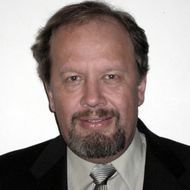
Ратников Федор Дмитриевич
Факультет компьютерных наук
Профессиональные интересы
Должности
- Ведущий научный сотрудник — Факультет компьютерных наук, Институт искусственного интеллекта и цифровых наук, Научно-учебная лаборатория методов анализа больших данных
- Доцент — Факультет компьютерных наук, Департамент больших данных и информационного поиска
Био
- · Начал работать в НИУ ВШЭ в 2016 году.
- · Научно-педагогический стаж: 37 лет.
Образование
- 1994 · Кандидат физико-математических наук
- 1986 · Специалитет: Московский физико-технический институт, специальность «Экспериментальная ядерная физика», квалификация «Инженер-физик»
Опыт работы
- · Professional Experience:
- · 2016-Current Senior Researcher, High School of Economics, Moscow, Russia
- · 2014-2015: Senior Research Associate, Nebraska Un
- · iversity at Lincoln, USA.
- · •
- · Integrate work of 20+ people developing simulation
- · and reconstruction
- · 2023: software for CMS detector upgrade in
- · Fedor.Ratnikov@cern.ch
- · 2
- · •
- · Development and support of the software for the Cal
- · orimeter Upgrade
- · project and event mixing
- · 2008-2014: Scientist, Institute of Experimental Nucl
- · ear Physics (IEKP) in
- · Karlsruhe Institute of Technology, Germany.
- · •
- · Discovered the Higgs boson using CMS detector at LH
- · C (~1:10
- · 13
- · signal to
- · background ratio)
- · •
- · Searched for new physics using CMS detector at LHC
- · (~1:10
- · 14
- · signal to
- · background ratio)
- · •
Награды и поощрения
- · Почетная грамота НИУ ВШЭ (март 2025)
- · Благодарность НИУ ВШЭ (март 2023)
- · Благодарность Факультета компьютерных наук НИУ ВШЭ (сентябрь 2019)
- · Надбавка за публикации, вносящие особый вклад в международную научную репутацию НИУ ВШЭ (2022–2025)
- · Надбавка за публикацию в журнале из Списка А (и приравненном к нему научном издании) (2023–2024)
- · Надбавка за публикацию в международном рецензируемом научном издании (2021–2022, 2019–2021)
- · Надбавка за регулярные публикации в международных рецензируемых научных изданиях (2024–2029)
Гранты и проекты
- — · на соискание учёной степени кандидата наук
Конференции (2)
Показать все
- · 2023: 26th International Conference on Computing in High Energy and Nuclear Physics (CHEP-2023) (Норфолк). Доклад: What Machine Learning Can Do for Focusing Aerogel Detectors
- · 2023: The use of new methods for processing data of a physical experiment. Application of machine learning methods on the NICA complex. (Санкт-Петербург). Доклад: What Machine Learning Can Do for Focusing Aerogel Detectors
Идентификаторы исследователя
- ORCID:
0000-0003-0762-5583 - ResearcherID:
D-5137-2016 - SPIN РИНЦ:
6754-4147 - Google Scholar: https://scholar.google.ru/citations?user=vbLFLLEAAAAJ&hl=en
- Scopus AuthorID:
35227881400
Публикации (13)
Fast simulation of the electromagnetic calorimeter response using Self-Attention Generative Adversarial Networks
2021 · CHAPTER · en
Machine Learning in Calorimeter optimization
2021 · ARTICLE · en
The optimization of big industrial setups and the accompanying detailed simulations of internal physical processes require complex and time-consuming simulation calculations. We propose a versatile approach that can alleviate difficulties in solving this problem and show this using an example of electromagnetic calorimeter optimization at a Large Hadron Collider experiment. Our approach consists of a block representation of the calorimeter optimization process from setting sensitive characteristics of modules and their locations to obtaining a quality metric and applying machine learning methods. The main blocks are signal and background particles generation and their propagation to the calorimeter, the generation of electromagnetic showers of signal and noise in modules with a given technology, the combination of signal and noise with the simulation of different luminosities, the energy and spatial reconstruction of the signal and obtaining the final metric. This approach allows us to evaluate the operational characteristics of the calorimeter and find a more suitable configuration with the necessary quality without extensive use of time-consuming resources.
ML-assisted versatile approach to Calorimeter R&D
2020 · ARTICLE · en
Advanced detector R&D for both new and ongoing experiments in HEP requires performing computationally intensive and detailed simulations as part of the detector-design optimisation process. We propose a versatile approach to this task that is based on machine learning and can substitute the most computationally intensive steps of the process while retaining the GEANT4 accuracy to details. The approach covers entire detector representation from the event generation to the evaluation of the physics performance. The approach allows the use of arbitrary modules arrangement, different signal and background conditions, tunable reconstruction algorithms, and desired physics performance metrics. While combined with properties of detector and electronics prototypes obtained from beam tests, the approach becomes even more versatile. We focus on the Phase II Upgrade of the LHCb Calorimeter under the requirements on operation at high luminosity. We discuss the general design of the approach and particular estimations, including spatial and energy resolution for the future LHCb Calorimeter setup at different pile-up conditions.
Курсы (6)
-
Deep Learning · 5 раза
2025/2026, 2024/2025, 2023/2024, 2022/2023, 2021/2022 · Магистратура / Маго-лего · Анг
-
Research Seminar "Data Analysis in Business"
2025/2026 · Бакалавриат · Анг
-
Research Seminar "Data Analysis in the Natural Sciences" · 4 раза
2025/2026, 2024/2025, 2023/2024, 2022/2023 · Бакалавриат · Анг
-
01.04.02. Прикладная математика и информатика · 3 раза
2023/2024, 2022/2023, 2021/2022 · Магистратура · Анг / рус
-
Машинное обучение для построения моделей · 2 раза
2023/2024, 2022/2023 · Маго-лего · рус
-
Обучение с подкреплением
2021/2022 · Магистратура · рус