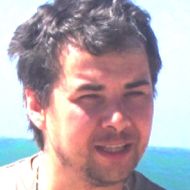
Осадчий Алексей Евгеньевич
Институт когнитивных нейронаук
Профессиональные интересы
Должности
- Директор центра — Институт когнитивных нейронаук, Центр биоэлектрических интерфейсов
- Профессор — Факультет компьютерных наук, Департамент анализа данных и искусственного интеллекта
Био
- · Начал работать в НИУ ВШЭ в 2013 году.
- · Научно-педагогический стаж: 21 год.
Образование
- 2023 · Доктор наук: Национальный исследовательский университет "Высшая школа экономики"
- 2003 · PhD: Университет Южной Калифорнии, специальность 01.00.00 «Физико-математические науки» и 03.03.06 «Нейробиология», тема диссертации: Автоматическое неинвазивное обнаружение и анализ взаимодействия эпилептогенных зон на основании МЭГ и ЭЭГ измерений
- 1997 · Специалитет: Московский государственный технический университет им. Н.Э. Баумана, специальность «Автономные информационные и управляющие системы», квалификация «Инженер-радиотехник»
Опыт работы
- · Директор Центра биоэлектрических интерфейсов НИУ ВШЭ Ведущий научный сотрудник Центра познания и принятия решений НИУ ВШЭ Профессор кафедры анализа данных и искусственного интеллекта НИУ ВШЭ Старший научный сотрудник Центра познания и принятия решений НИУ ВШЭ
- · 2007-2013: гг. Доцент див. для высшей нервной деятельности, Биолого-почвенный факультет Санкт-Петербургского государственного университета
- · 2005-2015: гг. Независимый консультант по визуализации сигналов источника, Сан-Диего, Калифорния
- · 2003-2005: гг. Старший ученый. Source Signal Imaging Inc., Сан-Диего, Калифорния
- · 1999 — 2003: 09/ Научный сотрудник. Лаборатория нейровизуализации при USC, адв. Р. Лихи
- · 2002 — 2003: 09/ Научный сотрудник. Отделение MEG в Huntington Medical Res. Inst
- · 2001: 06/ 01/
- · 2002: Консультационный отдел химии, USC
- · 2000: 05/ 08/
- · 2000: Research Intern. Исследовательские лаборатории Хьюза, Малибу, Калифорния
- · 1998: 09/ 08/
- · 1999: Научный сотрудник. Центр интегрированных медиа-систем (IMSC, USC)
- · 1995: 03/ 07/
- · 1998: Научный сотрудник. Исследовательский центр «Модуль», Москва
- · 01.1993 — 03.1995: Научный сотрудник. Кафедра автономных систем управления МГТУ им. Н. Э. Баумана
Награды и поощрения
- · Медаль "Признание - 10 лет успешной работы" НИУ ВШЭ (июль 2025)
- · Благодарность Высшей школы экономики (сентябрь 2021)
- · Благодарность Факультета компьютерных наук НИУ ВШЭ (август 2018)
- · Надбавка за защиту докторской диссертации (2023–2026)
- · Надбавка за публикацию в международном рецензируемом научном издании (2019–2021, 2018–2020, 2017–2018)
- · Надбавка за регулярные публикации в международных рецензируемых научных изданиях (2024–2029, 2023–2028, 2021–2026)
- · Надбавка за статью в зарубежном рецензируемом журнале (2015–2017)
Гранты и проекты
- 1017 · Система регистрации и декодирования биоэлектрической активности мозга человека, госконтракт, Министерство Образования и Науки РФ, совместно с ННГУ. 2014-1017 г.
- — · Новая неинвазивная экспериментально-математическая парадигма предоперационного магнитоэнцефалографического картирования речевой коры головного мозга, Грант РФФИ 14-02-00917
- — · РФФИ 16-04-01863 Эндогенное повышение эффективности работы интерфейсов мозг-компьютер
Конференции (10)
Показать все
- · 2024: 27th European Conference on Artificial Intelligence (ECAI 2024) (Сантьяго-де-Компостела). Доклад: EEG-Based fMRI Digital Twin: Towards a Cheap and Ecological Approach to Measure Subcortical Brain Activity
- · 2023: The Fifth International Conference «Neurotechnologies and Neurointerfaces» (CNN 2023) (Kaliningrad). Доклад: Interpretable neural networks in neurointerfaces and neuroimaging methods
- · 2023: Volga Neuroscience Meeting 2023 (Нижний Новгород). Доклад: Diagnostic approaches for precision medicine in epilepsy
- · 2016: IEEE International Symposium «Video and Audio Signal Processing in the Context of Neurotechnologies» (Санкт-Петербург). Доклад: MEG correlates of internalization of social influence
- · 2016: Biomag 2016 (Сеул). Доклад: Power and shift invariant imaging of coherent sources from MEG data (PSIICoS)
- · 2015: V Международная конференция по биотехнологиям и фармацевтике ФизтехБио — 2015 (Москва). Доклад: MEG and EEG based neuroimaging of transient networks
- · 2015: Методические проблемы оценки функциональной синхронизации зон коры мозга на основании ЭЭГ-/МЭГ данных» (Москва). Доклад: МЭГ как результат активности и взаимодействия динамических сетей: метод порождающей модели
- · 2014: International conference on biomagnetism, Biomag 2014 (Галифакс). Доклад: Interaction Space RAP-MUSIC for estimation of transient networks from MEG data
- · 2014: 9th FENS Forum of Neuroscience (Милан). Доклад: MPFC activity varies with differences in social conformity: MEG study
- · 2014: Научная сессия "Проблемы мозга" Российской Академии Наук (Москва). Доклад: Эффективное нейробиоуправление на основе пространственно-временных динамических моделей
Идентификаторы исследователя
- ORCID:
0000-0001-8827-9429 - ResearcherID:
M-9067-2013 - SPIN РИНЦ:
5631-4743 - Google Scholar: https://scholar.google.ru/citations?user=uVunrzkAAAAJ&hl=en
- Scopus AuthorID:
6603011121
Публикации (98)
Прецизионная медицина эпилепсии -- от эпилептогенных сетей до кортикальных волн
2023 · CHAPTER · ru
Эпилепсия представляет собой неврологическое заболевание, охватывающее не менее 50 миллионов людей и характеризующееся регулярными приступами. Треть пациентов, страдающих эпилепсией, не восприимчива к фармакологическому лечению. В таких случаях требуется хирургическая резекция эпилептогенных зон, порождающих эпилептиформную активность. Анализ такого маркера эпилепсии, как межсудорожные разряды, является критичным для локализации эпилептогенных зон и оценки динамики их активации. Первый компонент предлагаемого нами подхода – это автоматическая детекция межсудорожных разрядов с использованием параметризации формы спайка посредством двух линейных сегментов и параболы и последующего применения логических предикатов к результатам свертки морфологической модели спайка и данных на каналах МЭГ/ЭЭГ. Автоматически обнаруженные разряды затем локализуются в пространстве коры с помощью методов моделирования диполей. В соответствии с модельными данными этот метод чувствителен к межсудорожным разрядам низкой амплитуды и устойчив к высокоамплитудным артефактам (Kleeva et al., 2022). Применение метода к данным синхронно регистрируемых МЭГ и ЭЭГ демонстрирует комплементарность этих двух типов данных с учетом обнаружения не пересекающихся полностью эпилептогенных участков и различий в топографических свойствах выявляемых паттернов. Второй компонент подхода – оценка динамических характеристик выявленных межсудорожных паттернов. Эта оценка предполагает представление разряда не в качестве активации статичных источников, а в виде бегущей волны, закономерности в распространении которой могут давать дополнительные сведения о первичном эпилептогенном очаге (Кузнецова и соавт., 2022). Альтернативно подходу прямого анализа кортикальных волн возможно использовать нелинейные динамические модели для исследования пространственно-временной структуры интериктальных событий. Применение методов, учитывающих динамическую природу пространственной структуры МЭГ/ЭЭГ демонстрирует информативность с точки зрения идентификации эпилептогенной зоны и позволяет реконструировать геометрические характеристики интериктальной активности.
Курс медитации осознаности вызывает активацию симпатической нервной системы и улучшение психоэмоционального состояния
2023 · CHAPTER · ru
Введение. Все больше научных данных подтверждают положительное влияние медитации на физическое и психическое здоровье. Несмотря на это, необходимы дополнительные исследования для полного понимания физиологических и психологических изменений, происходящих во время медитации и после практики. Цель. Оценить влияние курса занятий даосской медитацией (8 недель) на психоэмоциональное состояние и физиологические параметры. Материалы и методы. В исследовании приняли участие 25 человек. 12 в экспериментальной группе от 20 до 37 лет (28,08±5,45, 3 мужчин и 9 женщин), 13 в контрольной группе от 21 до 38 лет (27,69±5,68, 4 мужчин и 9 женщин). До и после воздействия участникам провели измерения физиологических показателей, таких как частота дыхания, вариабельность сердечного ритма, частота сердечных сокращений и кожная проводимость в состоянии покоя и во время выполнения медитации. Для оценки психологического состояния использовали опросники. Результаты. Критерий Уилкоксона выявил значительные изменения в группе медитирующих: наблюдалось увеличение индекса вегетативного баланса (p=0,003, до 388,30±40,94 и 521,44±62,87 после), индекса стресса (p=0,003, до 24,51±2,99 и 35,52±4,73 после), показателя вегетативного ритма (p=0,004, до 10,28±1,30 и 15,01±2,10 после). T-критерий Стьюдента выявил значительное снижение баллов психической тревоги, депрессии, негативного аффекта и некоторых копинг-стратегий в группе медитирующих. Однако для этих значений не обнаружили статистически значимого взаимодействия между факторами группы и время.
Towards an EMG-Based Decoder of Natural Motor Intentions
2023 · CHAPTER · en
Despite recent advances, the development of systems that combine electromyographic activity with the recognition of natural intentions to move individual fingers or complex gestures remains a challenge. The challenge is to develop systems to teach patients how to control a prosthesis in the early stages of amputation. The study includes development of a system for non-contact acquisition of synchronized hand kinematics and high-density EMG electrodes grid from a small area of the wrist; identification of significant features in the EMG activity for model training; testing the existing neural network architectures for movement prediction; development of a system for iterative cooperative training of an emulated patient and a virtual prosthesis control algorithm. Eight healthy subjects with no history of neuromuscular disorders participated in the study. An online procedure was developed to synchronize the time series of kinematic parameters estimated from the video stream and the 64-channel EMG collected by a high-density electrode grid (4×4 cm) placed over the flexor carpi radialis, palmaris longus, and flexor carpi ulnaris muscles. The experimental paradigm included continuous movements of individual fingers and fixation of 7 wrist gestures in each of the 4 arm positions. Independent component analysis (ICA) combined with the mutual information (MI) metrics showed the presence of components related to the movement of each individual finger. On average, 2.3 (SD = 0.7) EMG components were identified as having a high degree of MI with kinematics. An iterative procedure was developed based on increasing the complexity of the tasks for synchronized execution of movements of the restricted hand emulating an amputee. Decoder training at each step used the mirrored kinematics of the “healthy” (unrestricted) hand. The model predictions were evaluated by calculating the mean angle of deviation from the real movements (MAE score). The best accuracy was observed for decoding single finger movements (9±2 degrees error standard deviation) and restricted finger movements (10±2 degrees error standard deviation), while the lowest results are for movements from the fist (20±5). The developed iterative subject training procedure demonstrates good convergence and can potentially be used for training amputees when no ground truth is available.
Hardware powered ultra low latency (HarPULL) brain-state dependent TMS technology
2023 · CHAPTER · en
The paper introduces a novel hardware-software complex for the low latency real time phase-dependent transcranial magnetic stimulation (TMS) neurofeedback. The software with key elements implemented on the board of the EEGrecording device accurately tracks the sensorimotor rhythm phase with minimal time-delay and immediately sends the trigger to the TMS-device. An accurate phase estimation is achieved by proper Kalman filter-based state-space modeling of brain rhythm. Our experiments demonstrate the system’s viability and its almost instant reaction on the target brain event occurrence. Our results potentially make neurofeedback, cortical mapping, therapeutic TMS-interventions and other applications more reliable and efficient.
Hardware powered ultra low latency (HarPULL) brain-state dependent TMS technology
2023 · CHAPTER · en
The paper introduces a novel hardware-software complex for the low latency real time phase-dependent transcra- nial magnetic stimulation (TMS) neurofeedback. The software with key elements implemented on the board of the EEG- recording device accurately tracks the sensorimotor rhythm phase with minimal time-delay and immediately sends the trigger to the TMS-device. An accurate phase estimation is achieved by proper Kalman filter-based state-space modeling of brain rhythm. Our experiments demonstrate the system’s viability and its almost instant reaction on the target brain event occurrence. Our results potentially make neurofeedback, cortical mapping, therapeutic TMS-interventions and other applications more reliable and efficient.
Разделение пространственных и электрических компонентов ритмической кортикальной активности: подход на основе динамического моделирования.
2023 · CHAPTER · ru
В традиционных исследованиях кортикальной активности предполагалось разделение пространственной и временной составляющих, а также использовалось такое представление нейронных данных, как усреднение по испытаниям, что не всегда подходит для изучения явлений с высокой изменчивостью. Тем временем как инвазивные, так и неинвазивные методы регистрации позволили обнаружить бегущие волны нейронной активности в различных областях мозга в разных контекстах, что делает статическую модель источников неприменимой. Традиционный подход к анализу данных ЭЭГ/МЭГ не учитывает локальных движений источника и предполагает, что изменения в сигналах сенсоров отражают исключительно колебания электрической активности. Для учета динамической природы источника и разделения пространственных и электрических компонентов его активности требуются новые методы. Мы предлагаем подход, который моделирует пространственную компоненту с помощью локальной прямой модели на основе данных многоканальной ЭЭГ и электрическую ритмическую компоненту как частотно модулированный процесс. Затем мы используем сигма-точечный фильтр Калмана (UKF, Unscented Kalman filter) для решения возникающей нелинейной задачи и сравниваем наш подход с классическими методами. Предложенную методику можно использовать как в интерфейсах мозг-компьютер, так и в широком спектре нейрокогнитивных экспериментов для повышения точности при состоянии зависимой стимуляции мозга.
AN 8-WEEK TAOIST MEDITATION TRAINING ALTERED BRAIN ACTIVITY AT REST, BUT NOT DURING MEDITATION
2023 · CHAPTER · en
Fast parametric curve matching (FPCM) for automatic spike detection
2022 · ARTICLE · en
Objective. Epilepsy is a widely spread neurological disease, whose treatment often requires resection of the pathological cortical tissue. Interictal spike analysis observed in the non-invasively collected EEG or MEG data offers an attractive way to localize epileptogenic cortical structures for surgery planning purposes. Interictal spike detection in lengthy multichannel data is a daunting task that is still often performed manually. This frequently limits such an analysis to a small portion of the data which renders the appropriate risks of missing the potentially epileptogenic region. While a plethora of automatic spike detection techniques have been developed each with its own assumptions and limitations, none of them is ideal and the best results are achieved when the output of several automatic spike detectors are combined. This is especially true in the low signal-to-noise ratio conditions. To this end we propose a novel biomimetic approach for automatic spike detection based on a constrained mixed spline machinery that we dub as fast parametric curve matching (FPCM). Approach. Using the peak-wave shape parametrization, the constrained parametric morphological model is constructed and convolved with the observed multichannel data to efficiently determine mixed spline parameters corresponding to each time-point in the dataset. Then the logical predicates that directly map to verbalized text-book like descriptions of the expected interictal event morphology allow us to accomplish the spike detection task. Main results. The results of simulations mimicking typical low SNR scenarios show the robustness and high receiver operating characteristic AUC values of the FPCM method as compared to the spike detection performed using more conventional approaches such as wavelet decomposition, template matching or simple amplitude thresholding. Applied to the real MEG and EEG data from the human patients and to rat ECoG data, the FPCM technique demonstrates reliable detection of the interictal events and localization of epileptogenic zones concordant with independent conclusions made by the epileptologist. Significance. Since the FPCM is computationally light, tolerant to high amplitude artifacts and flexible to accommodate verbalized descriptions of an arbitrary target morphology, it is likely to complement the existing arsenal of means for analysis of noisy interictal datasets.
Data-driven approach for the delineation of the irritative zone in epilepsy in MEG
2022 · ARTICLE · en
The reliable identification of the irritative zone (IZ) is a prerequisite for the correct clinical evaluation of medically refractory patients affected by epilepsy. Given the complexity of MEG data, visual analysis of epileptiform neurophysiological activity is highly time consuming and might leave clinically relevant information undetected. We recorded and analyzed the interictal activity from seven patients affected by epilepsy (Vectorview Neuromag), who successfully underwent epilepsy surgery (Engel > = II). We visually marked and localized characteristic epileptiform activity (VIS). We implemented a two-stage pipeline for the detection of interictal spikes and the delineation of the IZ. First, we detected candidate events from peaky ICA components, and then clustered events around spatio-temporal patterns identified by convolutional sparse coding. We used the average of clustered events to create IZ maps computed at the amplitude peak (PEAK), and at the 50% of the peak ascending slope (SLOPE). We validated our approach by computing the distance of the estimated IZ (VIS, SLOPE and PEAK) from the border of the surgically resected area (RA). We identified 25 spatiotemporal patterns mimicking the underlying interictal activity (3.6 clusters/patient). Each cluster was populated on average by 22.1 [15.0–31.0] spikes. The predicted IZ maps had an average distance from the resection margin of 8.4 ± 9.3 mm for visual analysis, 12.0 ± 16.5 mm for SLOPE and 22.7 ±. 16.4 mm for PEAK. The consideration of the source spread at the ascending slope provided an IZ closer to RA and resembled the analysis of an expert observer. We validated here the performance of a data-driven approach for the automated detection of interictal spikes and delineation of the IZ. This computational framework provides the basis for reproducible and bias-free analysis of MEG recordings in epilepsy.
Speech decoding from a small set of spatially segregated minimally invasive intracranial EEG electrodes with a compact and interpretable neural network
2022 · ARTICLE · en
Objective. Speech decoding, one of the most intriguing brain-computer interface applications, opens up plentiful opportunities from rehabilitation of patients to direct and seamless communication between human species. Typical solutions rely on invasive recordings with a large number of distributed electrodes implanted through craniotomy. Here we explored the possibility of creating speech prosthesis in a minimally invasive setting with a small number of spatially segregated intracranial electrodes. Approach. We collected one hour of data (from two sessions) in two patients implanted with invasive electrodes. We then used only the contacts that pertained to a single stereotactic electroencephalographic (sEEG) shaft or an electrocorticographic (ECoG) stripe to decode neural activity into 26 words and one silence class. We employed a compact convolutional network-based architecture whose spatial and temporal filter weights allow for a physiologically plausible interpretation. Main results. We achieved on average 55% accuracy using only six channels of data recorded with a single minimally invasive sEEG electrode in the first patient and 70% accuracy using only eight channels of data recorded for a single ECoG strip in the second patient in classifying 26+1 overtly pronounced words. Our compact architecture did not require the use of pre-engineered features, learned fast and resulted in a stable, interpretable and physiologically meaningful decision rule successfully operating over a contiguous dataset collected during a different time interval than that used for training. Spatial characteristics of the pivotal neuronal populations corroborate with active and passive speech mapping results and exhibit the inverse space-frequency relationship characteristic of neural activity. Compared to other architectures our compact solution performed on par or better than those recently featured in neural speech decoding literature. Significance. We showcase the possibility of building a speech prosthesis with a small number of electrodes and based on a compact feature engineering free decoder derived from a small amount of training data.
Курсы (1)
-
Mathematical Aspects of EEG and MEG Based Neuroimaging · 5 раза
2025/2026, 2024/2025, 2023/2024, 2022/2023, 2021/2022 · Магистратура / Маго-лего · Анг