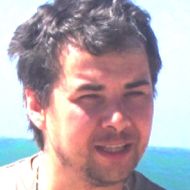
Осадчий Алексей Евгеньевич
Институт когнитивных нейронаук
Профессиональные интересы
Должности
- Директор центра — Институт когнитивных нейронаук, Центр биоэлектрических интерфейсов
- Профессор — Факультет компьютерных наук, Департамент анализа данных и искусственного интеллекта
Био
- · Начал работать в НИУ ВШЭ в 2013 году.
- · Научно-педагогический стаж: 21 год.
Образование
- 2023 · Доктор наук: Национальный исследовательский университет "Высшая школа экономики"
- 2003 · PhD: Университет Южной Калифорнии, специальность 01.00.00 «Физико-математические науки» и 03.03.06 «Нейробиология», тема диссертации: Автоматическое неинвазивное обнаружение и анализ взаимодействия эпилептогенных зон на основании МЭГ и ЭЭГ измерений
- 1997 · Специалитет: Московский государственный технический университет им. Н.Э. Баумана, специальность «Автономные информационные и управляющие системы», квалификация «Инженер-радиотехник»
Опыт работы
- · Директор Центра биоэлектрических интерфейсов НИУ ВШЭ Ведущий научный сотрудник Центра познания и принятия решений НИУ ВШЭ Профессор кафедры анализа данных и искусственного интеллекта НИУ ВШЭ Старший научный сотрудник Центра познания и принятия решений НИУ ВШЭ
- · 2007-2013: гг. Доцент див. для высшей нервной деятельности, Биолого-почвенный факультет Санкт-Петербургского государственного университета
- · 2005-2015: гг. Независимый консультант по визуализации сигналов источника, Сан-Диего, Калифорния
- · 2003-2005: гг. Старший ученый. Source Signal Imaging Inc., Сан-Диего, Калифорния
- · 1999 — 2003: 09/ Научный сотрудник. Лаборатория нейровизуализации при USC, адв. Р. Лихи
- · 2002 — 2003: 09/ Научный сотрудник. Отделение MEG в Huntington Medical Res. Inst
- · 2001: 06/ 01/
- · 2002: Консультационный отдел химии, USC
- · 2000: 05/ 08/
- · 2000: Research Intern. Исследовательские лаборатории Хьюза, Малибу, Калифорния
- · 1998: 09/ 08/
- · 1999: Научный сотрудник. Центр интегрированных медиа-систем (IMSC, USC)
- · 1995: 03/ 07/
- · 1998: Научный сотрудник. Исследовательский центр «Модуль», Москва
- · 01.1993 — 03.1995: Научный сотрудник. Кафедра автономных систем управления МГТУ им. Н. Э. Баумана
Награды и поощрения
- · Медаль "Признание - 10 лет успешной работы" НИУ ВШЭ (июль 2025)
- · Благодарность Высшей школы экономики (сентябрь 2021)
- · Благодарность Факультета компьютерных наук НИУ ВШЭ (август 2018)
- · Надбавка за защиту докторской диссертации (2023–2026)
- · Надбавка за публикацию в международном рецензируемом научном издании (2019–2021, 2018–2020, 2017–2018)
- · Надбавка за регулярные публикации в международных рецензируемых научных изданиях (2024–2029, 2023–2028, 2021–2026)
- · Надбавка за статью в зарубежном рецензируемом журнале (2015–2017)
Гранты и проекты
- 1017 · Система регистрации и декодирования биоэлектрической активности мозга человека, госконтракт, Министерство Образования и Науки РФ, совместно с ННГУ. 2014-1017 г.
- — · Новая неинвазивная экспериментально-математическая парадигма предоперационного магнитоэнцефалографического картирования речевой коры головного мозга, Грант РФФИ 14-02-00917
- — · РФФИ 16-04-01863 Эндогенное повышение эффективности работы интерфейсов мозг-компьютер
Конференции (10)
Показать все
- · 2024: 27th European Conference on Artificial Intelligence (ECAI 2024) (Сантьяго-де-Компостела). Доклад: EEG-Based fMRI Digital Twin: Towards a Cheap and Ecological Approach to Measure Subcortical Brain Activity
- · 2023: The Fifth International Conference «Neurotechnologies and Neurointerfaces» (CNN 2023) (Kaliningrad). Доклад: Interpretable neural networks in neurointerfaces and neuroimaging methods
- · 2023: Volga Neuroscience Meeting 2023 (Нижний Новгород). Доклад: Diagnostic approaches for precision medicine in epilepsy
- · 2016: IEEE International Symposium «Video and Audio Signal Processing in the Context of Neurotechnologies» (Санкт-Петербург). Доклад: MEG correlates of internalization of social influence
- · 2016: Biomag 2016 (Сеул). Доклад: Power and shift invariant imaging of coherent sources from MEG data (PSIICoS)
- · 2015: V Международная конференция по биотехнологиям и фармацевтике ФизтехБио — 2015 (Москва). Доклад: MEG and EEG based neuroimaging of transient networks
- · 2015: Методические проблемы оценки функциональной синхронизации зон коры мозга на основании ЭЭГ-/МЭГ данных» (Москва). Доклад: МЭГ как результат активности и взаимодействия динамических сетей: метод порождающей модели
- · 2014: International conference on biomagnetism, Biomag 2014 (Галифакс). Доклад: Interaction Space RAP-MUSIC for estimation of transient networks from MEG data
- · 2014: 9th FENS Forum of Neuroscience (Милан). Доклад: MPFC activity varies with differences in social conformity: MEG study
- · 2014: Научная сессия "Проблемы мозга" Российской Академии Наук (Москва). Доклад: Эффективное нейробиоуправление на основе пространственно-временных динамических моделей
Идентификаторы исследователя
- ORCID:
0000-0001-8827-9429 - ResearcherID:
M-9067-2013 - SPIN РИНЦ:
5631-4743 - Google Scholar: https://scholar.google.ru/citations?user=uVunrzkAAAAJ&hl=en
- Scopus AuthorID:
6603011121
Публикации (98)
Методика оценки влияния интероцептивных сигналов на возбудимость моторной коры
2025 · CHAPTER · ru
Известно, что моторная кора и кортикоспинальная система демонстрируют повышенную возбудимость в систолической фазе сердечного цикла по сравнению с диастолической (Al et al., 2023). Кроме того, предыдущие исследования показали, что интероцептивная чувствительность может быть усилена через самонаблюдение (Ainley et al., 2012). Это позволило выдвинуть гипотезу о том, что зрительные стимулы, усиливающие осознание телесных состояний, могут влиять на связь между фазой сердечного цикла и корковой возбудимостью. Задачей настоящего исследования была разработка экспериментальной методики для изучения роли интероцептивной чувствительности, усиленной через визуальное самонаблюдение, в модуляции корковой возбудимости, опосредованной фазой сердечного цикла. Она заключается в предъявлении участникам фотографий их собственного лица и лиц других людей в случайном порядке. Синхронно с этим применялась транскраниальная магнитная стимуляция моторной коры с задержками 0, 250 и 500 мс относительно R-пика ЭКГ. Моторная возбудимость оценивалась с использованием электромиографии. На данный момент методика была протестирована на трех здоровых добровольцах. Полученные данные показали тенденцию к снижению амплитуды моторных вызванных потенциалов (МВП) при восприятии фотографий лица испытуемого по сравнению с чужими на задержке 250 мс. Эти результаты позволяют предположить, что фокусировка на собственном изображении усиливает торможение кортикоспинальной возбудимости. Разработанная методика может применяться для изучения взаимодействия интероцептивных и экстероцептивных процессов в модуляции моторной возбудимости коры головного мозга.
Инженерно-математические методы интерпретации электро- и магнитоэнцефалографических сигналов
2025 · ARTICLE · ru
-
SIGNAL: Dataset for Semantic and Inferred Grammar Neurological Analysis of Language
2025 · ARTICLE · en
Recently, the idea of brain-model alignment has been the topic of several influential works. However, most of previous studies were based on datasets collected during regular reading tasks where the subjects were not exposed to processing linguistic incongruencies, and stimuli were not controlled for key linguistic properties. Meanwhile, interpretability studies of Large Language Models pay growing attention to thoroughly designed linguistic tasks based on certain acceptability measures. We present a dataset that contains 600 sentences with a combination of congruent and grammatically or/and semantically incongruent sentences coupled with high density 64-channel EEG recordings of 21 participants. The text stimuli were assessed by native speakers and later used in EEG recording and validation and LLM probing. The validation results proved suitability of the data for future research on brain-model alignment in the linguistic context.
Brain Topography A Journal of Cerebral Function and Dynamics
2025 · BOOK · en
Magnetoencephalography (MEG) and electroencephalography (EEG) provide complementary insights into brain activity, yet their distinct biophysical principles influence how normal neurophysiological patterns and artifacts are represented. This study presents a comprehensive qualitative and quantitative analysis of common physiological variants and artifacts in simultaneously recorded MEG and EEG data. We systematically examined patterns such as alpha spindles, sensorimo tor rhythms, sleep-related waveforms (vertex waves, K-complexes, sleep spindles, and posterior slow waves of youth), as well as common artifacts including eye blinks, chewing, and movement-related interferences. By applying time-domain, time-frequency, and source-space analyses, we identified modality-specific differences in signal representation, source localization, and artifact susceptibility. Our results demonstrate that MEG provides a more spatially focal representation of physiological patterns, whereas EEG captures broader, radially oriented cortical activity. Mutual information analysis indicated that MEG-derived independent components exhibited greater topographical variability and higher information content for neurophysiological activity, while EEG components were more homogeneous. Signal-to-noise ratio (SNR) analysis confirmed that MEG planar gradiometers capture the highest total information, followed by magnetometers and then EEG. Notably, physiological signals such as vertex waves and K-complexes exhibited significantly higher total infor mation in MEG, whereas EEG was more sensitive to high-amplitude artifacts, including swallowing and muscle activity. These findings highlight the distinct strengths and limitations of MEG and EEG, reinforcing the necessity of multimodal approaches in clinical and research applications to improve the accuracy of neurophysiological assessments.
Qualitative and Quantitative Comparative Analysis of Common Normal Variants and Physiological Artifacts in MEG and EEG
2025 · ARTICLE · en
Magnetoencephalography (MEG) and electroencephalography (EEG) provide complementary insights into brain activity, yet their distinct biophysical principles influence how normal neurophysiological patterns and artifacts are represented. This study presents a comprehensive qualitative and quantitative analysis of common physiological variants and artifacts in simultaneously recorded MEG and EEG data. We systematically examined patterns such as alpha spindles, sensorimo tor rhythms, sleep-related waveforms (vertex waves, K-complexes, sleep spindles, and posterior slow waves of youth), as well as common artifacts including eye blinks, chewing, and movement-related interferences. By applying time-domain, time-frequency, and source-space analyses, we identified modality-specific differences in signal representation, source localization, and artifact susceptibility. Our results demonstrate that MEG provides a more spatially focal representation of physiological patterns, whereas EEG captures broader, radially oriented cortical activity. Mutual information analysis indicated that MEG-derived independent components exhibited greater topographical variability and higher information content for neurophysiological activity, while EEG components were more homogeneous. Signal-to-noise ratio (SNR) analysis confirmed that MEG planar gradiometers capture the highest total information, followed by magnetometers and then EEG. Notably, physiological signals such as vertex waves and K-complexes exhibited significantly higher total infor mation in MEG, whereas EEG was more sensitive to high-amplitude artifacts, including swallowing and muscle activity. These findings highlight the distinct strengths and limitations of MEG and EEG, reinforcing the necessity of multimodal approaches in clinical and research applications to improve the accuracy of neurophysiological assessments.
Short-term meditation training alters brain activity and sympathetic responses at rest, but not during meditation
2024 · ARTICLE · en
Although more people are engaging in meditation practices that require specialized training, few studies address the issues associated with nervous activity pattern changes brought about by such training. For beginners, it remains unclear how much practice is needed before objective physiological changes can be detected, whether or not they are similar across the novices and what are the optimal strategies to track these changes. To clarify these questions we recruited individuals with no prior meditation experience. The experimental group underwent an eight-week Taoist meditation course administered by a professional, while the control group listened to audiobooks. Both groups participated in audio-guided, 34-min long meditation sessions before and after the 8-week long intervention. Their EEG, photoplethysmogram, respiration, and skin conductance were recorded during the mediation and resting state periods. Compared to the control group, the experimental group exhibited band-specific topically organized changes of the resting state brain activity and heart rate variability associated with sympathetic system activation. Importantly, no significant changes were found during the meditation process prior and post the 8-week training in either of the groups. The absence of notable changes in CNS and ANS activity indicators during meditation sessions, for both the experimental and control groups, casts doubt on the effectiveness of wearable biofeedback devices in meditation practice. This finding redirects focus to the importance of monitoring resting state activity to evaluate progress in beginner meditators. Also, 16 h of training is not enough for forming individual objectively different strategies manifested during the meditation sessions. Our results contributed to the development of tools to objectively monitor the progress in novice meditators and the choice of the relevant monitoring strategies. According to our findings, in order to track early changes brought about by the meditation practice it is preferable to monitor brain activity outside the actual meditation sessions.
Representational dissimilarity component analysis (ReDisCA)
2024 · ARTICLE · en
The principle of Representational Similarity Analysis (RSA) posits that neural representations reflect the structure of encoded information, allowing exploration of spatial and temporal organization of brain information processing. Traditional RSA when applied to EEG or MEG data faces challenges in accessing activation time series at the brain source level due to modeling complexities and insufficient geometric/anatomical data. To address this, we introduce Representational Dissimilarity Component Analysis (ReDisCA), a method for estimating spatial–temporal components in EEG or MEG responses aligned with a target representational dissimilarity matrix (RDM). ReDisCA yields informative spatial filters and associated topographies, offering insights into the location of ”representationally relevant” sources. Applied to evoked response time series, ReDisCA produces temporal source activation profiles with the desired RDM. Importantly, while ReDisCA does not require inverse modeling its output is consistent with EEG and MEG observation equation and can be used as an input to rigorous source localization procedures. Demonstrating ReDisCA’s efficacy through simulations and comparison with conventional methods, we show superior source localization accuracy and apply the method to real EEG and MEG datasets, revealing physiologically plausible representational structures without inverse modeling. ReDisCA adds to the family of inverse modeling free methods such as independent component analysis (Makeig, 1995), Spatial spectral decomposition (Nikulin, 2011), and Source power comodulation (Dähne, 2014) designed for extraction sources with desired properties from EEG or MEG data. Extending its utility beyond EEG and MEG analysis, ReDisCA is likely to find application in fMRI data analysis and exploration of representational structures emerging in multilayered artificial neural networks.
Fast Parametric Curve Matching (FPCM) Filters for Deep Learning-Based Automatic Spike Detection
2024 · CHAPTER · en
EEG-Based fMRI Digital Twin: Towards a Cheap and Ecological Approach to Measure Subcortical Brain Activity
2024 · CHAPTER · en
Курсы (1)
-
Mathematical Aspects of EEG and MEG Based Neuroimaging · 5 раза
2025/2026, 2024/2025, 2023/2024, 2022/2023, 2021/2022 · Магистратура / Маго-лего · Анг