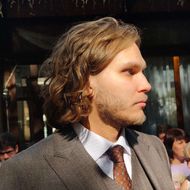
Батов Артём Алексеевич
Институт когнитивных нейронаук
Должности
- Стажер-исследователь — Институт когнитивных нейронаук, Центр исследований интеллекта и когнитивного благополучия
Био
- · Начал работать в НИУ ВШЭ в 2026 году.
Идентификаторы исследователя
- ORCID:
0000-0002-1153-9947 - Scopus AuthorID:
59390777500
Публикации (4)
Motor imagery perspective shapes corticospinal excitability with effector-specific effects
2026 · ARTICLE · en
Motor imagery (MI) allows individuals to mentally simulate movements without execution, engaging neural pathways that overlap with those used during real actions. However, how imagery perspective influences corticospinal excitability across different effectors remains unclear. Using neuronavigated transcranial magnetic stimulation (TMS), we compared kinesthetic (KMI), first-person visual (VMI-1PP), and third-person visual (VMI-3PP) imagery of elbow flexion-extension in nineteen healthy adults. Single-pulse TMS was synchronized with a metronome marking the imagined peak contraction, and motor-evoked potentials were recorded from upper-arm and intrinsic hand muscles. All imagery types enhanced corticospinal excitability relative to a pacing-only baseline. For upper-arm muscles, VMI-3PP and KMI produced stronger facilitation than VMI-1PP, with no difference between KMI and VMI-3PP. In contrast, intrinsic hand muscles showed similar facilitation across all imagery types. These findings reveal that imagery perspective and effector interact to shape corticospinal output: proximal muscles are more sensitive to perspective, whereas distal muscles respond uniformly. The observation that third-person visual imagery can match kinesthetic imagery in enhancing corticospinal excitability highlights its potential as a practical and effective strategy for training and neurorehabilitation.
Исследование функционирования зеркальных нейронов в норме, при неврологических и психиатрических заболеваниях: систематический обзор литературы
2024 · ARTICLE · ru
Система зеркальных нейронов — «базовая система» коры головного мозга. Она обеспечивает способность понимания действий окружающих и играет ключевую роль в моторном обучении и эмпатии. В данном обзоре мы подробно рассмотрели внутренние и внешние факторы, влияющие на функционирование системы зеркальных нейронов; выявили проблемы, связанные с трудностями интерпретации мю-ритма и с теорией мышления, особенно заметные при анализе системы зеркальных нейронов в контексте психических заболеваний; рассмотрели роль этой системы в формировании ряда психических расстройств и неврологических заболеваний. Дополнительно мы обратили внимание на перспективное направление для будущих исследований — изучение системы зеркальных нейронов в рамках болезни Паркинсона, в особенности функционирования дофаминергической системы в норме и при патологии. Авторами предложены перспективные направления для дальнейших исследований: анализ мю-ритма, роль когнитивного анализа реакции системы зеркальных нейронов, изучение этой системы при психических и неврологических заболеваниях
Effects after Transcranial Direct Current Stimulation of the Visual Cortex on Motor Imagery
2024 · CHAPTER · en
The impact of transcranial direct current stimulation (tDCS) on motor imagery (MI) holds significant potential for neurorehabilitation. Most studies focus on tDCS of the primary motor cortex (M1), neglecting other cerebral cortex regions involved in MI. This study examines the effects of tDCS of the visual cortex using different currents (anode, cathode, sham) on MI. Eleven healthy right-handed volunteers participated in three sessions differed in the type of current used, performing the same MI tasks involving visual imagery (V1) or kinesthetic imagery (KI) of elbow joint flexion and extension. Motor-evoked potentials (MEPs) from five right arm muscles were averaged and normalized relative to the baseline before tDCS. The results showed a statistically significant effect of tDCS combined with MI on the average MEPs of conditions (Pillai trace p = 0.019), highlighting the potential for further research on visual imagination.
Unraveling the Complexities of Motor Imagery and Its Impact on the Brain's Capabilities
2024 · CHAPTER · en
This study is dedicated to identifying differences in 4 types of motor imagery: first-person visual imagery, third-person visual imagery, kinesthetic imagery and sensory imagery. The research task includes Transcranial Magnetic Stimulation (TMS) over the motor cortex, during which Motor Evoked Potentials over 3 arm muscles will be measured. Also, correlations will be calculated between MEP amplitude and motor imagery vividness, as well as with some individual characteristics of the subjects (such as depression, anxiety, handedness, footedness, alexithymia and tendency for maladaptive daydreaming).
Курсы (0)
Нет курсов.