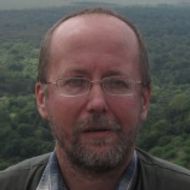
Коротаев Андрей Витальевич
Факультет социальных наук
Профессиональные интересы
Должности
- Директор центра — Факультет социальных наук, Центр изучения стабильности и рисков
- Главный научный сотрудник — Факультет социальных наук, Центр изучения стабильности и рисков
Био
- · Начал работать в НИУ ВШЭ в 2001 году.
Образование
- 2006 · Ученое звание: Профессор
- 1998 · Доктор исторических наук: Институт востоковедения РАН, специальность 07.00.03 «Всеобщая история»
- 1993 · PhD: специальность 07.00.03 «Всеобщая история»
- 1990 · Кандидат исторических наук
- 1984 · Специалитет: Московский государственный университет им. М.В. Ломоносова, Институт стран Азии и Африки, специальность «История», квалификация «Историк-востоковед»
Опыт работы
- · Должность и место работы:
- · Главный научный сотрудник Института научно-общественной экспертизы (ИНОЭ)
Награды и поощрения
- · Благодарность факультета социальных наук НИУ ВШЭ (февраль 2026)
- · Медаль "Признание - 10 лет успешной работы" НИУ ВШЭ (февраль 2025)
- · Благодарность Высшей школы экономики (декабрь 2022)
- · Благодарность первого проректора НИУ ВШЭ (февраль 2021)
- · Надбавка за публикацию в журнале из Списка А (и приравненном к нему научном издании) (2025–2026, 2024–2025, 2023–2024)
- · Надбавка за публикацию в международном рецензируемом научном издании (2019–2021, 2018–2019)
- · Надбавка за регулярные публикации в международных рецензируемых научных изданиях (2021–2026)
- · Надбавка за статью в зарубежном рецензируемом журнале (2015–2017, 2013–2015)
- · Надбавка за статью в зарубежном рецензируемом научном издании (2016–2018)
- · Лучший преподаватель — 2024
Гранты и проекты
- — · Методика анализа баз данных для выявления рисков социально-политической дестабилизации, ПНФ (2017)Новая архитектура миропорядка на Ближнем и Среднем Востоке, ПФИ (2018)Ближний и Средний Восток в контексте глобального фазового перехода, ПФИ (2017)Арабская весна как триггер глобального фазового перехода, ПФИ (2016)Мониторинг рисков социально-политической нестабильности в контексте глобальных дестабилизационных процессов, ПФИ (2015)Мониторинг рисков социально-политической дестабилизации в "афразийской" зоне нестабильности, ПФИ (2014)Мониторинг рисков социально-политической дестабилизации, ПФИ (2012)
Идентификаторы исследователя
- ORCID:
0000-0003-3014-2037 - ResearcherID:
N-1160-2018 - SPIN РИНЦ:
9298-9020 - Google Scholar: https://scholar.google.com/citations?user=0KdRsMYAAAAJ=en
- Scopus AuthorID:
7003940480
Публикации (599)
Global Aging: An Integral Problem of the Future. How to Turn a Problem into a Development Driver?
2023 · CHAPTER · en
High-Income and Low-Income Countries. Toward a Common Goal at Different Speeds
2023 · CHAPTER · en
The chapter discusses the necessity of choosing different strategies for different groups of countries for a successful movement to the recognized worldwide goals. In this respect, strategies as well as policies depend on different causes and conditions, including demographics, natural resources, historical traditions, etc., but especially on levels of development of countries which are very uneven. The most important and deep gap is the one between the income levels of highincome and low-income countries. However, it happens quite often when highincome countries as well as their (or world) organizations impose on low-income countries strict and almost single-type programs for economic and social reforming, transforming of agricultural or energetic spheres, and so on for achievement of approved world goals (as democracy, carbon neutrality, sustainable development, decrease of inequality and injustice, increase in state efficiency, rates of economic growth, consumptions optimizing, etc.). These programs are worked out on the basis of high-income countries’ experience and they are often not suitable for many low-income countries. Grinin et al. maintain that there should not be single-type recommendations, programs, etc. for all countries for their taking part in the world-wide movement toward common goals. There are common world goals, but for their achievement different countries would need strategies, policies, programs, and measures of different types, which would take into consideration specifics of different societies. Though there still is a great gap between high-income and low-income countries, Grinin & Korotayev note that the process of “Great Divergence” (when the abovementioned gap had been increasing since the early nineteenth century) in the recent decades was replaced by the “Great Convergence,” when this difference in development is reduced by increasing the level of development in less prosperous states. This convergence is characterized by heterogeneity—different rates of development of certain states, on the basis of which fast-growing states and less high-income states (mainly the countries of Tropical Africa) are distinguished. This feature requires different approaches in solving global problems common to all countries of the world. In view of this, Grinin et al. draw attention to the need to form global strategies for moving toward sustainable development, taking into account differences in development and available opportunities. In some countries, the level of development of capitalism has reached a level at which it is already exhausting itself and transformations are required, while there are countries in which full-fledged market relations have not yet been formed. Grinin et al. maintain that in the coming decades, the world will experience a complex continuum of types, transitions, combinations, and forms of economic structures. The authors analyze two main types. The high-income countries will experience a shift toward the strengthening of distributive institutions. The low-income countries that continue the processes of economic and socio-political modernization, in their turn, will proceed toward the strengthening of capitalist market institutions though with some important restrictions preventing exploitation and environmental degradation. All this will take place during the final phase of the Cybernetic Revolution, with the development of the process of internationalization of the labor force (through the development of remote employment) along with the internationalization of capital. Thus, the most important task in the coming decades is to increase the flexibility of the socioeconomic development of all countries of the world. Grinin & Korotayev believe that it is necessary to find ways to combine all the best features of capitalism in order to provide the necessary dynamism and innovativeness of development, at the same time softening all the distortions that have formed as a result of the development of capitalism over the past twenty years, bearing in mind that not so much industrial capitalism as financial and global financial capitalism is responsible for it.
Africa: The Continent of the Future. Challenges and Opportunities
2023 · CHAPTER · en
Grinin and Korotayev’s main approach in this chapter is formulated in its title “Africa—the Continent of the Future. Challenges and Opportunities.” And it is really so. Africa is the most rapidly growing continent, and its growth (demographic, economic, cultural, etc.) will inevitably influence the World System (and the further, the stronger). The growth of African societies will bring at the same time both challenges and opportunities. Grinin and Korotayev discuss both of them in detail. Grinin and Korotayev consider Africa as the main intrigue of demographic transformations in the twenty-first century. But they also think that this continent can constitute a very important intrigue in other respects (economic, political, ethnical etc.). No doubt, in the future, African countries will produce many surprises both positive and negative. Grinin and Korotayev suppose that, with respect to the humankind’s future development, Africa will be a great source of both problems and their solutions. For example, the problem of surplus labor force will continue to be acute in Africa. But on the other hand, in the context of declining birth rates in most of regions of the planet, these are African labor resources that can partially help solve the problem of labor shortages in high income countries. The growth of the African economy should be inevitable already in connection with the growth of the population, especially urban one, and its escape from extreme poverty. On the one hand, African growth could greatly influence ecology (especially in agrarian sector). But on the other hand, the future African growth can become an increasingly important source of global growth, which is close to its exhaustion. Besides, this growth is able to partially solve the problem of the shortage of many resources, at least for some significant time. Much will also depend on how deeply, systematically and quickly the green energy transition will develop. For its implementation, in addition to a host of technological and other restraining problems, an important limiting factor is the shortage of many metals and components (like silicon) necessary for green energy, electric vehicles and other equipment. Some countries of Africa are rich in resources that are in great demand in the modern electronics industry and green energy; in addition, one cannot but mention the reserves of rare earth metals. The need for these minerals can activate foreign capital and accelerate the industrial development of Africa, which will undoubtedly affect the decline in fertility, as well as the growth of interest in Africa among the leading geopolitical and economic players with all the pros and cons of their active penetration to this continent. Therefore, the world community faces an important task of trying to use the African resources as efficiently as possible to solve global problems, with the maximum benefit for the Africans themselves. Grinin and Korotayev also discuss problems of current and future instability in many African countries, connected with rapid growth, modernization, weakness of statehood and national historical experience, traditions, and so on. So in some sense Grinin and Korotayev expect that the twenty-first century will be the African century.
Modeling Social Self-Organization and Historical Dynamics. An Overview
2023 · CHAPTER · en
Sadovnichy et al. present this chapter as an introductory one to the Mathematical Part which consists of nine chapters, including the present one. In the present chapter, Sadovnichy et al. explain the design of the Mathematical Part, which mathematical apparatus is used, how the chapters and conclusions of this part are connected with those in the previous chapters of the present report, etc. Sadovnichy et al. also show what this Mathematical Part is about, why it is needed, how it is organized, and so on. The Mathematical Part of the present Report to the Russian Association of the Club of Rome mostly presents results of mathematical modeling of various aspects of historical, present, and future reality and forecasts, but it also includes important verbal qualitative sections. Its necessity is dictated by the fact that, although in the previous parts of the present report, Sadovnichy et al. have realized most of its goals, however, in order for its conclusions to become more convincing and scientific, they must also be supported by logical and mathematical modeling. This Mathematical Part is called “Modeling Social Self-Organization and Historical Dynamics—from Agrarian to Cybernetic W-Society.” This name reflects its structure, since the chapters of this part consider social systems of the past, present, and future. On the other hand, it implements important methodological assumptions. In accordance with these assumptions, the objects of research and modeling in the Mathematical Part are the basic processes (including social and political ones) that determine features of interaction between various spheres of life at respective phases of historical development. The logic of the Mathematical Part leads us from ancient societies to modern and future ones, through understanding how phase transitions occur from one type of society to another, and allows us to make forecasts about the future society. The chapters of this part demonstrate how we see the combining of the world systems, historical and evolutionary approaches, a systematic view of society, and mathematical modeling within a single research program.
Modeling Social Self-Organization and Historical Dynamics. A General Approach
2023 · CHAPTER · en
Akaev et al. outline their methodological approach to mathematical modeling of social self-organization and historical dynamics, which is used in the study of processes occurring in the world and in forecasting further world development. They describe basic equations (in the demographic, ecological, economic, technological, social, and political spheres) and the order of their use in modeling world dynamics. Based on these equations, a set of basic models has been developed that describes interactions in the “society—nature” system, as well as interactions within society between the main social groups (including economic and political interactions). Finally, Akaev et al. propose a technique for analyzing modeling results based on constructing and studying features of phase portraits of respective equation systems.
Modeling Social Self-Organization and Historical Dynamics. Agrarian Society
2023 · CHAPTER · en
This chapter presents the results of applying the set of basic models described in the previous chapter to model the dynamics of an agrarian society. Both interactions in the “society–nature” system and social interactions within society between the main social groups (including economic and political interactions) are considered. It is shown that agrarian society is characterized by cyclical demographic and economic dynamics due to the limited resource base (primarily limited land resources) and the low level of technological development. Based on the modeling of social interactions, the main structural and functional features of a typical agrarian society are revealed. It is shown that in agrarian societies, the mechanisms of social self-organization mainly lead to the formation of social structures of the so-called X-type.
Modeling Social Self-Organization and Historical Dynamics. Industrial Society
2023 · CHAPTER · en
This chapter presents the results of using the set of basic models described in the chapter “Modeling Social Self-Organization and Historical Dynamics. A General Approach” to model the dynamics of an industrial society. Both interactions in the “society–nature” system and social interactions within society between the main social groups (including economic and political interactions) are considered. It is shown that industrial society is characterized by the continuous growth of the main demographic and economic characteristics due to the high pace of technological development and the expansion of the resource base associated with this. Based on the modeling of social interactions, the main structural and functional features of an industrial society are identified, leading to the formation of social structures of the so-called Y-type (which are characterized by a market economy, republican forms of government, and individualism in the sociopsychological sphere). It is shown that a necessary condition for the effective functioning of Y-type social structures is economic growth, in the absence of which they experience crisis and transformation into structures of other types.
Modeling Social Self-organization and Historical Dynamics: Global Phase Transitions
2023 · CHAPTER · en
This chapter presents the results of using the set of basic models outlined in Chapter “Modeling Social Self-Organization and Historical Dynamics. A General Approach” to model transitional eras, when, due to technological revolutions, there is a sharp acceleration in the pace of economic (and, after that, demographic) development, a “society of stability/stagnation” is transformed into a “growth society,” the dominance of X-type social structures is replaced by the dominance of Y-type structures. Examples of such transitional eras are the Axial Age (in the first millennium BCE) and the industrial era (the last 200 years). Malkov et al. consider characteristic features of transitional epochs, analyze the logic of the evolution of economic and social processes, and model these mathematically. It is shown that in the initial phases of such eras, there is a hyperbolic growth of the main demographic and economic characteristics, and at the final stage, there is a sharp slowdown, accompanied by strong social instability and a reverse transition from the dominance of Y-type social structures to the dominance of X-type structures.
Modeling Social Self-Organization and Historical Dynamics: Modern Society and a Look into the Global Future. Cybernetic W-Society
2023 · CHAPTER · en
This chapter presents the results of the application of the set of basic models outlined in chapter “Modeling Social Self-Organization and Historical Dynamics. A General Approach” (Akaev et al., 2023, this volume) to model the current historical situation and to forecast its further development. Akaev et al. show that the modern historical period is a period of transition from the “epoch of growth,” which followed the industrial revolution of the early nineteenth century, to the “era of deceleration,” one of the strongest indicators of which is a rapid decrease in the growth rate of the Earth's population and its aging. They perform the analysis of the ongoing changes in all spheres of life. Akaev et al show the uniqueness of the ongoing changes and consider alternative options for further development.
Курсы (4)
-
Актуальные вопросы исследований стран Азии и Африки · 3 раза
2025/2026, 2024/2025, 2023/2024 · Бакалавриат · рус
-
Contemporary Revolutions Abroad · 2 раза
2025/2026, 2023/2024 · Бакалавриат · Анг
-
Актуальные проблемы современной политики
2024/2025 · Майнор · рус
-
История изучаемого региона (Ближний Восток)
2021/2022 · Ближний Восток · рус